Preschool Math Activities: Fun Ways to Boost Early Learning
Fun Preschool Math Activities That Build Early Learning & Number Skills
Preschool math activities are essential for laying the foundation of mathematical thinking in young children. These activities introduce basic concepts like counting, shapes, patterns, measurement, and problem-solving in a fun and engaging way. By incorporating hands-on learning, Montessori math activities, and playful strategies, preschoolers develop critical thinking skills and a love for numbers early on. With interactive games, sensory-based activities, and creative learning tools, preschool math activities can cater to different learning styles and abilities.
In this guide, we will explore the most effective strategies, types of activities, tips for implementation, and answer frequently asked questions to ensure children gain maximum benefit from math-focused learning experiences, including counting activities for preschoolers and number recognition games.
Importance of Preschool Math Activities
Preschool math activities are not just about numbers—they build cognitive skills and logical thinking. When children engage with counting activities for preschoolers, sorting exercises, or shapes and colors activities, they enhance memory, attention, and problem-solving abilities. Math worksheets for preschool and early math skills for toddlers support learning by providing structured opportunities to practice concepts. Early exposure to these activities reduces math anxiety and fosters confidence in approaching numerical problems. Furthermore, these activities create opportunities for collaborative play, teaching social skills such as sharing, patience, and teamwork.
Key Areas Covered in Preschool Math Activities
1. Counting and Number Recognition
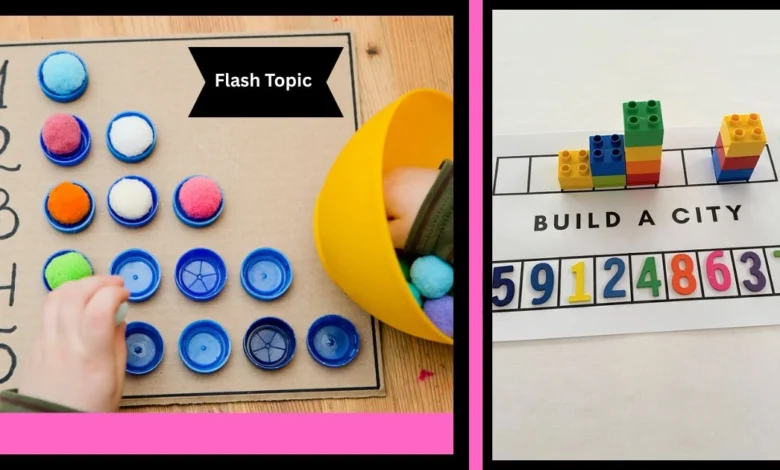
Counting activities for preschoolers help children recognize numbers and understand their sequence. Number recognition games can be used with objects, beads, or blocks to practice counting from 1 to 20 or beyond. Hands-on math activities such as moving items as they count connect abstract numbers to tangible quantities. Number recognition can be reinforced through flashcards, puzzles, and games that associate visual numbers with quantities. Interactive counting songs and rhymes can also make learning numbers more enjoyable and memorable.
2. Shape and Pattern Recognition
Preschool math activities that focus on shapes help children identify geometric figures in the environment. Shapes and colors activities, including shape sorting, matching games, and building with blocks, support visual and spatial learning. Pattern recognition activities, such as arranging colored beads or drawing sequences, improve logical thinking and predictive skills. Recognizing patterns lays the groundwork for algebraic thinking later in school. Engaging in shape and pattern activities also enhances fine motor skills through hands-on manipulation.
3. Measurement and Comparison
Introducing concepts of size, length, weight, and volume in preschool math activities helps children understand basic measurement. Children can compare objects, sort them by size, or use measuring cups for fun, practical activities. Measurement games promote observation skills, vocabulary development, and the ability to make comparisons and predictions. Incorporating everyday objects like cups, rulers, or toys makes measurement relatable and engaging. Montessori math activities can also integrate measurement tasks to strengthen understanding.
4. Sorting and Classification
Sorting and classification activities develop logical thinking and analytical skills. Preschoolers can categorize objects by color, size, or type, which strengthens cognitive abilities and attention to detail. These activities often involve hands-on materials like buttons, blocks, or shells. Sorting and pattern games introduce foundational concepts for data organization and analysis in a child-friendly way. Grouping items teaches children to observe similarities and differences, a key math skill.
5. Problem-Solving and Critical Thinking
Preschool math activities can include puzzles, simple logic games, and story-based problems. Simple addition for preschoolers and subtraction activities for kids can be embedded in role-play or practical scenarios. These activities encourage children to analyze situations, make decisions, and find solutions independently. Problem-solving tasks improve concentration and reasoning, building a strong foundation for future math learning. Activities that involve building, matching, or sequencing challenge children to apply mathematical concepts creatively. Integrating critical thinking into daily activities fosters curiosity and resilience in learning.
Types of Preschool Math Activities
1. Hands-On Counting Games
Hands-on counting games use physical objects like beads, blocks, or stones. Children move items as they count, connecting abstract numbers to tangible quantities. Activities such as counting snack pieces or toys make learning relatable and fun. These games can be tailored to individual skill levels, supporting both beginners and advanced learners. Incorporating songs or interactive storytelling enhances engagement and supports early math skills for toddlers.
2. Shape Sorting and Building Activities
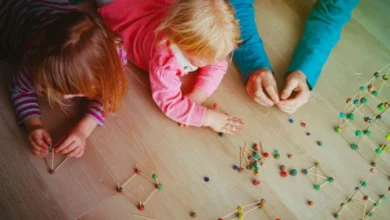
Shape-based activities include sorting games, building blocks, and drawing exercises. Preschoolers learn to recognize shapes and understand spatial relationships. Building towers or creating patterns with blocks strengthens fine motor skills while teaching geometry basics. These activities can be adapted into classroom centers or home play setups for flexible learning. Collaborative building encourages teamwork and problem-solving. Montessori math activities often utilize these approaches for structured learning.
3. Pattern and Sequence Games
Pattern and sequence games involve arranging objects, colors, or numbers in predictable orders. Activities like creating bead necklaces, drawing sequences, or interactive board games help preschoolers recognize repeating patterns. Sorting and pattern games promote logical thinking and early algebraic understanding. Sequencing tasks can also be tied to daily routines, such as steps in washing hands or dressing, to reinforce learning naturally.
4. Measurement and Comparison Activities
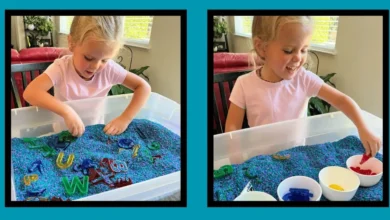
Using everyday items, children can engage in fun measurement activities. Activities like pouring water between containers, comparing toy sizes, or arranging objects by length teach basic measurement concepts. These exercises enhance observational skills and vocabulary, introducing terms like longer, shorter, heavier, and lighter. Measurement activities can be combined with hands-on math activities for multisensory learning.
5. Math-Related Storytelling and Role Play
Integrating math concepts into storytelling helps children understand numbers in context. Role-play scenarios like shopping, cooking, or building encourage counting, simple addition for preschoolers, subtraction activities for kids, and logical reasoning. Story-based activities make preschool math activities engaging and relevant. Children can use pretend money, blocks, or everyday items to practice practical math skills. This approach supports both cognitive development and creativity.
Table: Preschool Math Activities and Their Learning Benefits
| Activity Type | Skills Developed | Example Materials |
| Counting and Number Recognition | Number sense, memory, attention | Beads, blocks, counting cards |
| Shape and Pattern Recognition | Geometry, spatial awareness, fine motor | Blocks, shape puzzles, drawings |
| Measurement and Comparison | Observation, vocabulary, comparison skills | Cups, rulers, toys |
| Sorting and Classification | Logical thinking, categorization | Buttons, shells, toys |
| Problem-Solving and Critical Thinking | Reasoning, concentration, decision making | Puzzles, story-based tasks |
Tips for Effective Preschool Math Activities
- Incorporate play-based learning to keep children engaged.
- Use hands-on math activities to connect abstract concepts to real objects.
- Repeat activities regularly to reinforce concepts and memory.
- Encourage children to verbalize their thinking to build language and reasoning skills.
- Adapt activities to each child’s developmental level to prevent frustration and foster confidence.
Frequently Asked Questions About Preschool Math Activities
1. How do preschool math activities benefit early learning?
Preschool math activities strengthen cognitive development, logical thinking, and number sense. They also enhance fine motor skills and prepare children for formal math learning, including early math skills for toddlers.
2. What materials are best for preschool math activities?
Hands-on items like blocks, beads, buttons, measuring cups, and puzzles work best. These materials help connect abstract math concepts with tangible objects and support Montessori math activities.
3. How often should children engage in preschool math activities?
Daily short sessions of 15–30 minutes are ideal. Consistent engagement reinforces concepts without overwhelming preschoolers.
4. Can preschool math activities be combined with play?
Yes! Play-based math activities make learning enjoyable and meaningful. Counting activities for preschoolers, number recognition games, and sorting and pattern games naturally integrate math into fun play.
5. Are preschool math activities suitable for home and classroom?
Absolutely. These activities are flexible and can be adapted for individual home learning or group classroom settings, supporting collaborative and independent learning.
Conclusion
Preschool math activities are foundational for early numeracy, critical thinking, and problem-solving skills. By incorporating counting activities for preschoolers, number recognition games, shapes and colors activities, math worksheets for preschool, and Montessori math activities, children develop a strong understanding of numbers and logical reasoning. Hands-on math activities, simple addition for preschoolers, subtraction activities for kids, and sorting and pattern games make learning interactive and fun.
Regular engagement with these activities enhances early math skills for toddlers, creativity, and social development. Implementing a variety of preschool math activities at home or in classrooms ensures a love for learning, prepares children for formal education, and nurtures lifelong mathematical curiosity.