Weekly Preschool Lesson Plan Template: A Complete Guide for Structured Early Childhood Planning
A Complete Guide to Organized, Balanced & Stress-Free Preschool Planning
Introduction
Planning for preschool is not just about filling time with activities. It is about building foundational skills that prepare children for kindergarten and lifelong learning.
A well-designed weekly preschool lesson plan template gives teachers and homeschool parents a structured framework to organize:
- Early literacy instruction
- Math foundations
- Social-emotional development
- Fine and gross motor skills
- Sensory exploration
- Theme-based learning
Without a weekly system, planning can become inconsistent. Important skills may be repeated too often—or missed completely.
This guide will walk you through:
- The purpose of a weekly preschool lesson plan template
- Core components every plan must include
- How to align plans with early learning standards
- Sample weekly breakdown
- How theme-based curriculum connects to weekly planning
- Common planning mistakes
- FAQ section for teachers and homeschool parents
By the end, you will know how to create a balanced, developmentally appropriate weekly plan that supports cognitive, emotional, and physical growth.
What Is a Weekly Preschool Lesson Plan Template?
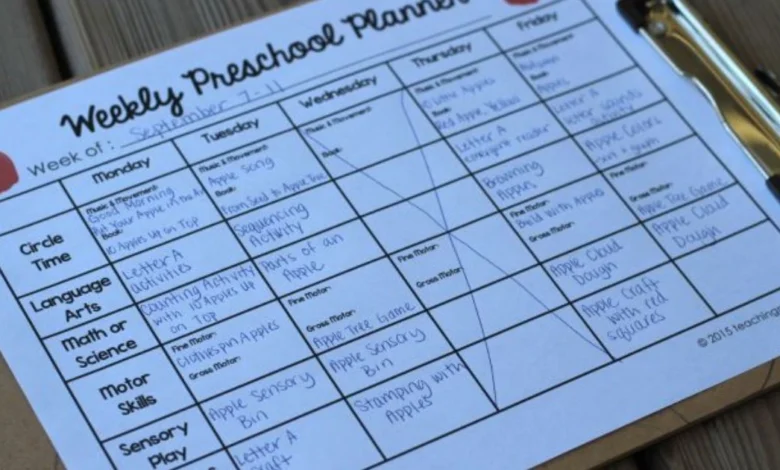
A weekly preschool lesson plan template is a structured planning document that outlines learning objectives, activities, materials, and assessments for five days of instruction.
Unlike daily lesson notes, weekly planning:
- Provides a clear instructional focus
- Ensures subject balance
- Supports skill progression
- Aligns with preschool curriculum frameworks
- Reduces teacher stress
In early childhood education, consistency is key. Children thrive in predictable environments with clear routines. Weekly planning supports this stability.
The Role of Weekly Planning in Early Childhood Education
Preschool learning is built around developmental domains:
- Cognitive development
- Language and literacy
- Social-emotional skills
- Physical development
- Creative expression
A weekly preschool lesson plan template ensures that each domain receives attention.
For example:
- Literacy builds phonemic awareness.
- Math builds number sense.
- Fine motor tasks prepare children for writing.
- Social-emotional lessons teach self-regulation.
Weekly planning allows educators to intentionally connect these domains instead of teaching them separately.
Why Weekly Lesson Planning Improves Learning Outcomes?
1. Promotes Skill Progression
Learning builds step by step. A weekly plan allows:
- Introduction
- Practice
- Reinforcement
- Assessment
Example:
Monday: Introduce shape “circle.”
Tuesday: Identify circles in classroom.
Wednesday: Draw circles.
Thursday: Compare circle with oval.
Friday: Review shapes through game.
This progression improves retention.
2. Supports Thematic Learning
Many preschool programs follow theme-based curriculum models such as:
- Creative curriculum
- Play-based learning
- Montessori-inspired themes
- Reggio-inspired exploration
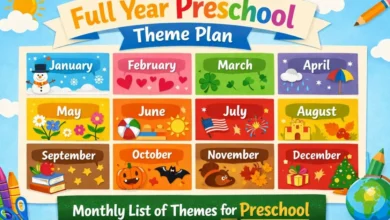
A weekly preschool lesson plan template breaks large monthly themes into manageable learning units.
Example:
Monthly Theme: Community Helpers
Weekly Focus: Firefighters
Each subject connects to that focus.
3. Enhances Classroom Organization
Structured weekly planning:
- Reduces behavior issues
- Keeps transitions smooth
- Improves time management
- Helps substitute teachers follow routines
Organization improves classroom climate.
Core Components of a Weekly Preschool Lesson Plan Template
A strong template should include the following sections.
1. Weekly Theme or Learning Focus
Themes help integrate subjects.
Examples:
- All About Me
- Ocean
- Fall
- Transportation
- Farm Animals
Theme-based planning increases vocabulary exposure and comprehension.
2. Learning Objectives (Measurable Outcomes)
Objectives guide instruction.

Strong preschool objectives:
- Recognize uppercase letter B
- Count objects up to 15
- Identify basic emotions
- Demonstrate proper pencil grip
- Follow two-step directions
Objectives should be clear and observable.
3. Literacy Block
Preschool literacy includes:
- Alphabet recognition
- Phonological awareness
- Story comprehension
- Vocabulary development
- Print awareness
Weekly literacy planning should include:
- Read-aloud sessions
- Letter tracing
- Rhyming activities
- Story retelling
Literacy is foundational for kindergarten readiness.
4. Math Block
Early math skills include:
- Counting
- Sorting
- Comparing quantities
- Patterning
- Shape recognition
Hands-on math examples:
- Counting manipulatives
- Pattern blocks
- Sorting by color or size
- Measuring with cubes
Math should be playful and interactive.
5. Science & Inquiry Activities
Preschool science builds curiosity.
Key science concepts:
- Observation
- Prediction
- Cause and effect
- Life cycles
- Weather patterns
Examples:
- Sink or float experiment
- Growing seeds
- Exploring magnets
- Observing insects
Science strengthens critical thinking skills.
6. Fine Motor Development
Fine motor skills prepare children for writing.
Include:
- Cutting practice
- Bead threading
- Playdough shaping
- Lacing cards
- Tracing lines
Motor skill development directly impacts academic success later.
7. Gross Motor Activities
Physical development is equally important.
Examples:
- Obstacle courses
- Movement songs
- Animal walks
- Outdoor play
Gross motor skills support coordination and body awareness.
8. Social-Emotional Learning
Preschoolers are learning:
- Emotional regulation
- Sharing
- Listening
- Empathy
- Conflict resolution
Include:
- Circle time discussions
- Role-play
- Calm-down strategies
- Feelings charts
Social-emotional learning improves classroom behavior.
9. Assessment and Observation Notes
Weekly templates should include space for:
- Skill mastery tracking
- Behavioral observations
- Areas of improvement
- Reflection notes
Assessment ensures instruction meets student needs.
Weekly Preschool Lesson Plan Structure Overview
| Section | Purpose | Example Activities | Skills Developed |
| Weekly Theme | Provides focus & integration | Farm Animals, Ocean, Fall | Vocabulary, comprehension |
| Learning Objectives | Defines measurable goals | Recognize letter A, Count to 10 | Cognitive development |
| Literacy Block | Builds early reading skills | Read-aloud, Letter tracing, Rhyming games | Phonemic awareness, print awareness |
| Math Block | Develops number sense | Counting objects, Sorting, Patterns | Logical thinking |
| Science & Discovery | Encourages curiosity | Sink/float experiment, Nature walk | Critical thinking |
| Fine Motor Skills | Strengthens hand muscles | Cutting, Beading, Playdough | Writing readiness |
| Gross Motor Skills | Improves physical coordination | Obstacle course, Movement songs | Balance & coordination |
| Social-Emotional Learning | Builds behavior skills | Feelings chart, Role play | Emotional regulation |
| Assessment & Reflection | Tracks progress | Observation notes | Skill monitoring |
How to Create a Weekly Preschool Lesson Plan Template? (Step-by-Step)
Step 1: Select a Weekly Theme
Choose a theme aligned with your monthly plan.
Example: Fall Leaves
Step 2: Define 3–5 Learning Goals
Example Goals:
- Recognize letter F
- Count to 12
- Identify fall colors
- Practice cutting curved lines
Step 3: Plan Integrated Activities
Each activity should connect to theme.
Literacy:
Read fall-themed book.
Math:
Count paper leaves.
Science:
Observe leaf colors.
Art:
Leaf rubbing craft.
Step 4: Balance Structure and Play
Preschoolers need:
- Guided instruction
- Independent centers
- Free play
- Outdoor time
Balance is essential.
Step 5: Add Reflection Section
End of week reflection improves planning quality.
Ask:
- What worked well?
- Which students need extra support?
- Was timing realistic?
Sample Weekly Preschool Lesson Plan Template (Detailed Example)
Theme: Farm Animals
Monday
Literacy:
- Introduce letter F
- Read farm story
Math:
- Count cows (1–10)
Fine Motor:
- Farm coloring page
Gross Motor:
- Animal movement game
Tuesday
Literacy:
- Trace letter F
Math:
- Sort animals by size
Science:
- Discuss animal habitats
Sensory:
- Corn sensory bin
Wednesday
Literacy:
- Rhyming game
Math:
- Pattern with animal pictures
Art:
- Paper plate pig craft
Social-Emotional:
- Sharing activity
Thursday
Literacy:
- Name writing practice
Math:
- Compare big vs small animals
Science:
- Animal sounds exploration
Fine Motor:
- Cutting barn shapes
Friday
Review Day:
- Letter recognition check
- Counting review
- Farm song
Assessment:
- Observe skill mastery
Aligning Weekly Lesson Plans With Preschool Standards
Strong weekly preschool lesson planning aligns with:
- Early literacy benchmarks
- Phonemic awareness standards
- Number sense progression
- Shape and spatial awareness
- Fine motor benchmarks
- Social-emotional competencies
Standards alignment improves academic continuity into kindergarten.
Common Mistakes in Weekly Preschool Lesson Planning
Overloading the Schedule
Too many activities overwhelm children.
Ignoring Flexibility
Children’s interests should guide adjustments.
Focusing Too Much on Worksheets
Hands-on learning is more effective in preschool.
Skipping Reflection
Without reflection, improvement is limited.
Benefits of Using a Weekly Preschool Lesson Plan Template
- Better classroom organization
- Stronger curriculum alignment
- Balanced developmental focus
- Reduced planning time
- Increased teacher confidence
- Improved student engagement
Structured planning supports holistic child development.
Frequently Asked Questions
How detailed should a weekly preschool lesson plan be?
Detailed enough to guide teaching but flexible enough for spontaneous learning moments.
Can homeschool parents use a weekly lesson plan template?
Yes. It helps ensure balanced skill exposure at home.
Should every week have a theme?
Themes improve engagement but are not mandatory. However, they enhance vocabulary and comprehension.
How long should preschool lessons last?
Short, focused sessions of 10–20 minutes work best.
Can weekly plans be reused?
Yes, with adjustments based on children’s developmental levels.
Final Thoughts
A well-designed weekly preschool lesson plan template transforms chaotic planning into intentional instruction.
It supports:
- Early childhood curriculum goals
- Developmental progression
- Thematic integration
- Classroom management
- Kindergarten readiness
When you plan weekly with clear objectives and balanced activities, you create an environment where children feel secure, engaged, and excited to learn.
Structured planning does not remove creativity—it strengthens it.
Start simple. Stay consistent. Reflect weekly. Adjust as needed.
With the right template, preschool teaching becomes more focused, organized, and effective.