Creative Curriculum Lesson Plan Template for Engaging Classrooms
Creative Curriculum Lesson Plan Template for Better Classroom Results
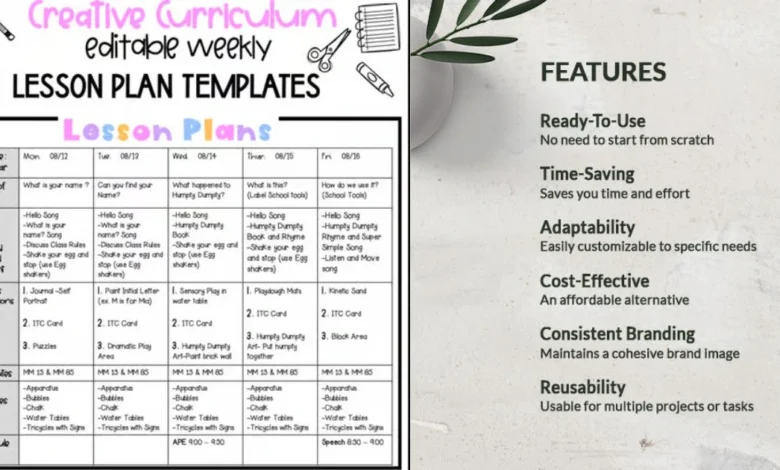
A creative curriculum lesson plan template is a flexible planning framework that helps teachers design meaningful, hands-on, student-centered lessons while still meeting clear academic goals. It combines structure and creativity so learning feels purposeful, engaging, and real.
If you’ve ever walked out of your classroom thinking, “They didn’t connect with that lesson the way I hoped,” you’re not alone. Every caring teacher has had that moment. The difference between a lesson that “covers content” and a lesson that truly connects often comes down to how it was planned.
This guide is written the way a mentor teacher would explain it to a new educator — honestly, clearly, and practically.
Why Traditional Lesson Planning Often Falls Short?
Let’s picture a common classroom situation.
You carefully prepare a lesson:
- You write notes.
- You create slides.
- You print worksheets.
- You explain the concept clearly.
Yet halfway through, students start drifting. A few are confused. A few are bored. Some finish early. Others need more help.
What happened?
The lesson may have been organized — but it wasn’t designed for exploration, flexibility, or student ownership.
That’s where a creative curriculum lesson plan template makes a difference. It shifts the focus from:
“How do I deliver this information?”
to
“How will students experience and apply this learning?”
That small shift changes everything.
What Is a Creative Curriculum Lesson Plan Template?
A creative curriculum lesson plan template is a structured guide that includes:
- Clear learning objectives
- An essential question
- Engaging, hands-on activities
- Differentiation strategies
- Authentic assessment methods
- Teacher reflection
It supports approaches like:
- Project-based learning
- Inquiry-based learning
- Student-centered instruction
- Differentiated instruction
- Thematic lesson planning
It is widely used in early childhood curriculum programs, elementary classrooms, and homeschool environments — but it works across all grade levels when adapted properly.
The heart of it is simple:
Students learn best when they actively participate.
The Core Components of a Creative Curriculum Lesson Plan Template
Let’s walk through each section in a clear, practical way.
1. Basic Lesson Information
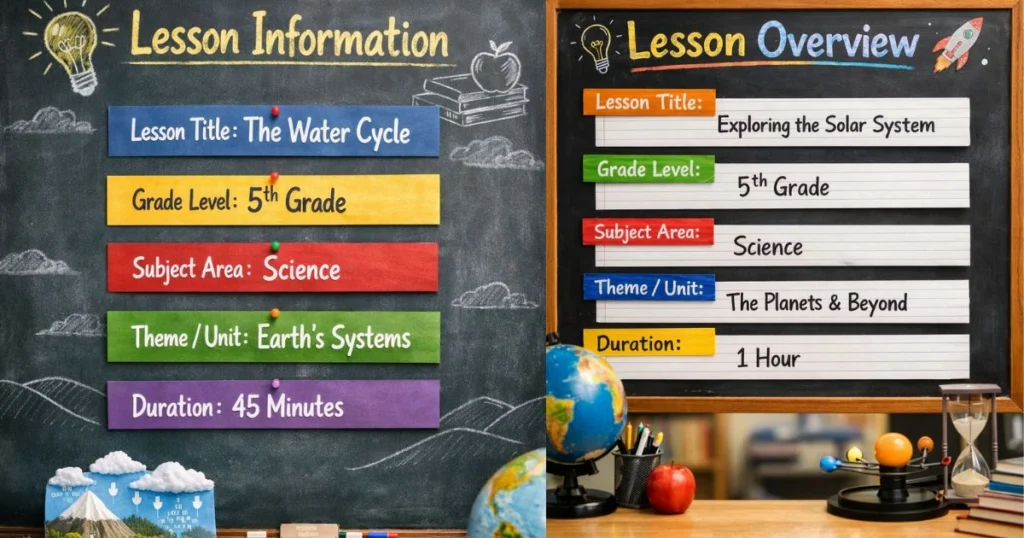
Start with clarity.
- Lesson Title
- Grade Level
- Subject Area
- Theme or Unit
- Duration
Even the most creative lesson needs structure.
This topic is part of the complete guide on the importance of curriculum in education.
2. Learning Objectives (The Foundation)
Objectives guide everything.
Weak objective:
Students will understand recycling.
Strong objective:
Students will identify recyclable materials and explain why recycling benefits the environment.
Good objectives are:
- Clear
- Measurable
- Skill-focused
- Student-centered
Without clear objectives, activities become busywork.
3. Essential Question
This is what sparks curiosity.
Examples:
- How do plants survive in different environments?
- Why do communities need rules?
- What makes weather change?
- How can we reduce waste at school?
An essential question encourages inquiry instead of memorization.
4. Materials and Resources
List everything needed:
- Books
- Art supplies
- Science materials
- Technology tools
- Visual aids
- Outdoor resources
Prepared teachers feel calm. Calm teachers teach better.
5. Learning Activities (Where Creativity Lives)
A strong creative curriculum lesson plan template organizes activities into stages:
| Stage | What Happens | Why It Matters |
| Hook | Attention-grabbing intro | Builds interest |
| Exploration | Hands-on activity | Deep engagement |
| Guided Practice | Small group work | Builds understanding |
| Independent/Creative Task | Project or creation | Encourages ownership |
| Reflection | Discussion or journal | Strengthens retention |
Activities might include:
- Role-playing
- Experiments
- Art integration
- Problem-solving tasks
- Outdoor observation
- Group projects
Creative doesn’t mean chaotic. It means intentional engagement.
6. Differentiation (Supporting Every Learner)
No two students learn the same way.
Your template should include strategies like:
| Student Need | Strategy |
| Visual learner | Charts, diagrams |
| Kinesthetic learner | Movement-based tasks |
| Advanced learner | Research extension |
| Struggling learner | Guided worksheet or partner support |
Differentiated instruction ensures inclusion and fairness.
7. Assessment (Natural and Ongoing)
Creative curriculum uses authentic assessment.
Instead of only giving a test, consider:
- Observation notes
- Project rubrics
- Exit tickets
- Student presentations
- Self-reflection checklists
Assessment should feel like part of learning — not a punishment at the end.
8. Teacher Reflection
This is often skipped — but it’s powerful.
Ask yourself:
- What worked well?
- Where did students struggle?
- Was the pacing realistic?
- What will I adjust next time?
Five minutes of reflection can improve your next lesson dramatically.
Traditional vs Creative Lesson Planning
| Feature | Traditional Lesson Plan | Creative Curriculum Lesson Plan Template |
| Focus | Deliver content | Student experience |
| Activities | Lecture & worksheet | Hands-on & inquiry |
| Engagement | Varies | High |
| Assessment | End test | Ongoing feedback |
| Flexibility | Limited | Adaptable |
Creative planning does not remove structure — it strengthens it.
Step-by-Step: Building Your Own Template
Let’s walk through a real example.
Step 1: Choose a Theme
Themes help integrate subjects naturally.
Examples:
- Seasons
- Community helpers
- Animals and habitats
- Healthy habits
- Space exploration
Step 2: Write Clear Objectives
Example (Grade 3 – Recycling):
- Identify recyclable items
- Measure classroom waste
- Create an awareness poster
Step 3: Design Cross-Curricular Activities
| Activity | Subject Connection |
| Sorting trash | Science |
| Measuring waste | Math |
| Writing persuasive letter | Language Arts |
| Designing poster | Art |
This is thematic lesson planning in action.
Step 4: Plan Differentiation
Ask:
- Who may need support?
- Who needs more challenge?
- Who needs movement?
Plan adjustments before teaching.
Step 5: Add Assessment
Use varied tools:
- Rubric for poster
- Observation checklist
- Exit reflection question
Real-Life Classroom Examples
Example 1: Preschool – Community Helpers
Teacher sets up:
- Doctor role-play corner
- Firefighter dress-up station
- Grocery store dramatic play
Assessment:
- Vocabulary use
- Social interaction
- Participation
This supports early childhood curriculum goals and social development.
Example 2: Elementary Science – Plant Life Cycle
Students:
- Plant seeds
- Measure growth
- Draw diagrams
- Write observation journals
Subjects integrated:
- Science
- Math
- Writing
- Art
Students remember because they experienced growth firsthand.
Example 3: Homeschool – Financial Literacy
Parent creates a pretend store.
Children:
- Practice buying
- Calculate change
- Track savings goals
Learning becomes real-life skill development.
Age-Wise Planning Guide
| Age Group | Focus | Example |
| Preschool | Sensory & play | Water exploration |
| Kindergarten | Early literacy | Alphabet hunt |
| Grades 1–2 | Exploration | Nature journal |
| Grades 3–5 | Projects | Build ecosystem model |
| Middle School | Research & debate | Community issue project |
Common Mistakes (And Honest Fixes)
| Mistake | Why It Happens | Practical Fix |
| Too many activities | Wanting it to be exciting | Focus on 2–3 strong tasks |
| No clear objectives | Rushing planning | Always write goals first |
| Poor timing | Underestimating discussions | Test pacing beforehand |
| Ignoring differentiation | Time pressure | Plan one support and one extension |
| Skipping reflection | Busy day | Schedule 5-minute review |
Improvement is part of teaching growth.
Teacher, Parent, and Student Perspectives
From a Teacher’s View
A creative curriculum lesson plan template:
- Reduces stress
- Increases organization
- Encourages innovation
- Makes assessment clearer
It feels intentional.
From a Parent’s View
Parents appreciate:
- Real-world learning
- Visible skill development
- Active participation
- Clear objectives
Especially in homeschool settings, balance is key.
From a Student’s View
Students feel:
- Involved
- Curious
- Confident
- Heard
They don’t just receive information — they build understanding.
Sample Creative Curriculum Lesson Plan Template
Lesson Title:
Grade Level:
Subject:
Theme:
Duration:
Learning Objectives:
- Essential Question:
- Materials:
Hook:
Activities:
1.Differentiation
2.Assessment
3.Reflection
How This Approach Changes Real Learning?
Imagine a Grade 4 class studying food waste.
Instead of reading a chapter, they:
- Audit cafeteria waste
- Create data charts
- Develop solutions
- Present to school leaders
That lesson builds:
- Math skills
- Science knowledge
- Writing ability
- Civic responsibility
Students remember it because they lived it.
Tips for Students
If your teacher uses creative lessons:
- Participate actively
- Share ideas confidently
- Ask thoughtful questions
- Respect group members
- Reflect on what you learned
Creative learning rewards curiosity and effort.
Frequently Asked Questions
1. Is creative curriculum only for young children?
No. While popular in early childhood education, it works for all grade levels with age-appropriate adjustments.
2. Does it meet curriculum standards?
Yes. Strong learning objectives ensure alignment with academic standards.
3. Is it more time-consuming?
At first, yes. Over time, it becomes more natural and efficient.
4. Can new teachers use this approach?
Absolutely. The template provides structure while allowing creativity.
5. How do I manage behavior during creative activities?
Set clear expectations, assign roles, and maintain structured timing. Creative does not mean uncontrolled.
Conclusion
A creative curriculum lesson plan template is more than a document. It is a thoughtful way of designing learning experiences.
It helps you move from simply covering content to creating meaningful engagement.
When you combine:
- Clear objectives
- Engaging exploration
- Differentiation
- Authentic assessment
- Reflection
You create lessons that students remember.
3 Key Takeaways
- Clear goals guide creative teaching.
- Engagement increases retention.
- Reflection improves future lessons.
Teaching is not about perfection.
It is about progress — for you and your students.
And a strong creative curriculum lesson plan template helps you move forward with confidence.
Flash Topic