Preschool Shape Activities: Fun and Educational Ways to Teach Shapes
Explore Fun, Hands-On Preschool Shape Activities That Build Early Math Skills
Teaching shapes is one of the first steps in early childhood learning, and using preschool shape activities can make this process both engaging and meaningful for young learners. Shapes help children develop visual recognition, spatial awareness, and early math skills that prepare them for kindergarten and beyond. When teachers and parents introduce shapes through playful activities, children naturally become curious about the world around them. Instead of memorizing shapes from worksheets, hands-on learning allows preschoolers to explore circles, squares, triangles, and other shapes in a fun and memorable way. These activities also strengthen cognitive development, fine motor skills, and problem-solving abilities.
In this guide, you will discover a variety of creative preschool shape activities that help children learn shapes through play, movement, art, and interactive learning.
Why Preschool Shape Activities Are Important?
Understanding shapes is a foundational skill in early childhood education because it connects to both math and everyday learning experiences. Through preschool shape activities, children begin recognizing patterns, comparing objects, and identifying similarities between different shapes. These skills support early geometry concepts and strengthen logical thinking in young learners. When children engage in activities like sorting shapes, tracing shapes, and building with shape blocks, they also improve their hand-eye coordination and concentration. Teachers often include shape recognition activities for preschoolers because they encourage active participation rather than passive learning. As a result, children develop stronger memory retention while enjoying the learning process.
Key Shapes Preschoolers Should Learn
Before planning activities, it is helpful to understand which shapes are typically introduced during preschool learning. Most early childhood classrooms begin with basic shapes that children frequently see in their daily environment. These shapes provide a simple starting point for building shape recognition and vocabulary. As children become more confident, educators gradually introduce additional shapes to expand their knowledge. By combining preschool math activities with shape learning, children develop a stronger understanding of geometry concepts at an early age.
Common Shapes for Preschool Learning
| Shape | Example in Real Life | Learning Benefit |
| Circle | Clock, wheel | Helps children understand round objects |
| Square | Window, tile | Introduces equal sides and corners |
| Triangle | Pizza slice, sign | Teaches point shapes and angles |
| Rectangle | Door, book | Helps recognize longer sides |
| Oval | Egg, balloon | Builds visual comparison skills |
| Star | Decorations | Encourages shape recognition |
Learning these shapes through fun shape activities for preschoolers allows children to connect classroom learning with real-world experiences.
Fun Preschool Shape Activities for Hands-On Learning
Hands-on learning is one of the most effective methods for teaching shapes to preschoolers. Instead of relying only on worksheets, children learn better when they can touch, move, and explore objects around them. Activities that involve movement, building, or art help reinforce shape recognition naturally. These hands-on preschool shape activities also support creativity and curiosity, which are essential for early childhood development.
Shape Sorting Activity
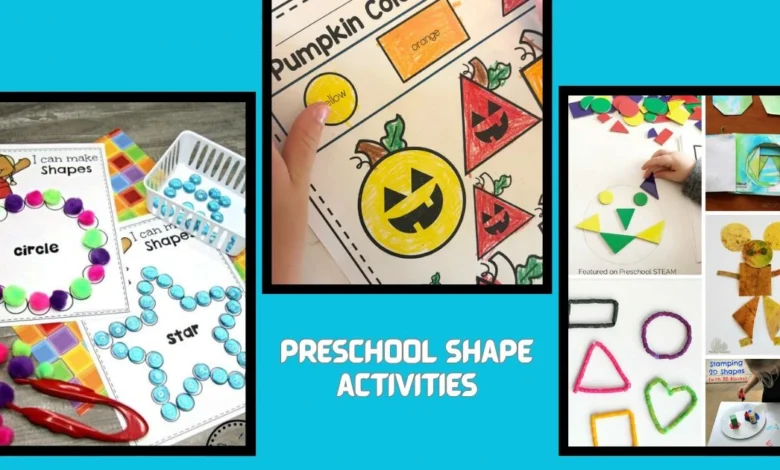
Shape sorting is one of the simplest yet most effective shape recognition activities for preschoolers. In this activity, children sort different objects or cards based on their shapes and place them into matching containers. Teachers can use colorful blocks, foam shapes, or printed cards to make the activity visually appealing. This activity encourages children to observe similarities and differences between shapes while improving classification skills. As they practice sorting, children also strengthen their concentration and decision-making abilities. Over time, they become more confident identifying shapes in different contexts.
Shape Hunt Around the Classroom
A shape hunt is a playful activity that turns learning into an adventure for preschoolers. In this activity, teachers ask children to walk around the classroom or playground and find objects that match specific shapes. For example, a clock may represent a circle, while a window may represent a square or rectangle. This type of activity helps children connect preschool shape learning with objects they see in real life. It also promotes physical movement, which keeps young learners engaged and excited. As children discover shapes around them, they begin understanding that shapes exist everywhere in their environment.
Shape Tracing and Drawing
Tracing shapes is an excellent way to strengthen fine motor skills while reinforcing shape recognition. Children can use crayons, markers, or pencils to trace circles, squares, triangles, and other shapes on paper. Teachers may also provide dotted outlines to guide beginners as they practice drawing shapes independently. This activity is particularly useful for preparing preschoolers for writing and early handwriting skills. When children repeatedly trace shapes, they develop better control over their hand movements. As a result, shape tracing activities for preschoolers help build both academic and motor development.
Creative Art-Based Shape Activities
Art activities allow preschoolers to explore shapes through creativity and imagination. When children create art using shapes, they learn to combine different forms to make pictures, animals, or objects. These creative tasks strengthen both artistic expression and shape recognition. Teachers often include preschool art activities with shapes to make math learning more enjoyable and engaging.
Shape Collage Activity
In a shape collage activity, children use paper cutouts of different shapes to create pictures or designs. For example, they may use triangles to build a house roof or circles to create balloons. This activity encourages children to think about how shapes fit together to form larger images. It also helps them develop spatial awareness and creativity. By arranging shapes in different ways, children learn that shapes can be combined to form complex designs. These creative preschool shape activities encourage imagination while reinforcing shape learning.
Shape Stamp Painting
Stamp painting is another fun activity that allows preschoolers to explore shapes through art. Teachers can create stamps using sponges cut into different shapes such as circles, stars, or triangles. Children dip the stamps into paint and press them onto paper to create colorful patterns. This activity helps children recognize shapes while experimenting with colors and textures. It also improves hand strength and coordination through repeated stamping motions. As a result, shape art activities for preschoolers become both educational and entertaining.
Outdoor Preschool Shape Activities
Outdoor learning adds excitement to preschool education because children enjoy exploring and moving around freely. Shape activities can easily be adapted for outdoor spaces such as playgrounds or gardens. When children learn shapes outside the classroom, they experience a more dynamic and engaging environment. These outdoor shape activities for preschoolers combine physical activity with educational learning.
Chalk Shape Drawing
Using sidewalk chalk, teachers can draw large shapes on the ground and invite children to trace or walk along the outlines. Children may jump from one shape to another or follow instructions like “stand on the triangle” or “hop to the circle.” This activity helps reinforce shape recognition through movement and play. It also encourages teamwork and listening skills when children follow instructions together. By incorporating physical activity, outdoor shape games keep preschoolers energized and engaged. These experiences make learning shapes feel like a fun adventure rather than a classroom task.
Table of Popular Preschool Shape Activities
| Activity | Skills Developed | Materials Needed |
| Shape Sorting | Shape recognition, classification | Shape blocks or cards |
| Shape Hunt | Observation, real-world learning | Classroom objects |
| Shape Tracing | Fine motor skills, writing readiness | Paper and crayons |
| Shape Collage | Creativity, spatial awareness | Colored paper shapes |
| Shape Stamp Art | Coordination, artistic skills | Sponge stamps, paint |
| Chalk Shape Game | Physical movement, listening | Sidewalk chalk |
These preschool shape activities help children develop multiple skills at the same time while keeping the learning process enjoyable.
Tips for Teaching Shapes to Preschoolers
Teaching shapes effectively requires patience, creativity, and repetition. Young learners benefit from activities that are colorful, interactive, and playful rather than overly structured. Teachers should introduce one or two shapes at a time so children can fully understand each concept. Repeating activities in different formats—such as games, art, and movement—helps reinforce learning. Using real-world examples like plates, books, and windows also makes shape recognition easier for children. When educators combine these strategies with fun preschool shape activities, children learn faster and retain information longer.
(FAQ’s)
What the best acis tivity to teach shapes?
Shape sorting is the best activity because it helps preschoolers recognize, match, and compare shapes through hands-on play.
Why are shapes important for preschoolers?
Shapes are important for preschoolers because they build early math skills, visual recognition, and spatial awareness.
What are the benefits of shape sorter activity for toddlers?
Shape sorter activities help toddlers improve fine motor skills, hand-eye coordination, and early problem-solving.
How do preschoolers teach about shapes?
Preschoolers learn about shapes best through sorting, tracing, crafts, songs, and real-life shape activities.
What are the benefits of shape activity?
Shape activities improve shape recognition, early geometry skills, fine motor control, and critical thinking.
What are 5 objects using shapes?
Five common shape objects are a clock (circle), window (square), door (rectangle), pizza slice (triangle), and egg (oval).
Conclusion
Introducing shapes through engaging activities is one of the best ways to support early childhood development. By using preschool shape activities, teachers and parents can turn simple lessons into exciting learning experiences that capture children’s attention. From sorting games and art projects to outdoor shape hunts, these activities help preschoolers build strong foundations in early math and problem-solving. Hands-on learning encourages curiosity, creativity, and confidence as children explore shapes in their environment. When shapes are taught through play and exploration, children naturally develop the skills needed for future academic success.
In the end, consistent and creative preschool shape activities help young learners recognize shapes, strengthen cognitive skills, and build a lifelong love for learning.