Creative Curriculum Preschool: A Complete Guide for Teachers and Parents
How Creative Curriculum Preschool Builds Skills Through Play
Creative curriculum preschool is a play-based, research-informed approach that helps young children learn through exploration, hands-on activities, and meaningful real-life experiences.
It supports the whole child—socially, emotionally, physically, and academically—by turning everyday classroom moments into powerful learning opportunities.
This topic is part of the complete guide on the importance of curriculum in education.
Introduction: When Preschool Feels Too “School-Like”
Imagine this.
A 4-year-old sits at a small table, holding a pencil too tightly. The worksheet asks her to trace letters for the third time today. She looks out the window instead. Across the room, another child fidgets, waiting for permission to move.
The teacher feels pressure. Parents want academic results. The school wants kindergarten readiness.
But here’s the truth many educators quietly admit:
Young children do not learn best through pressure and paperwork.
They learn through curiosity. Through play. Through conversation. Through building and pretending and exploring.
That is where creative curriculum preschool makes a powerful difference.
This approach respects childhood. It aligns teaching with how the brain develops in early years. It builds strong academic foundations without sacrificing joy.
In this comprehensive guide, you’ll learn:
- What creative curriculum preschool truly means
- Why it works (and what research says)
- How to apply it step-by-step
- Real classroom and homeschool examples
- Common mistakes and solutions
- Teacher, parent, and student perspectives
- Practical tools you can use immediately
Let’s begin from the foundation.
What Is Creative Curriculum Preschool?
Creative curriculum preschool is a child-centered, play-based early childhood education framework designed for children ages 3–5.
It combines:
- Structured daily routines
- Learning centers
- Long-term study topics
- Observation-based assessment
- Intentional teacher guidance
It is deeply influenced by the work of child development experts such as:
- Jean Piaget
- Lev Vygotsky
- Erik Erikson
Their research showed that:
- Children construct knowledge actively.
- Social interaction builds thinking skills.
- Emotional security supports learning.
- Play strengthens brain development.
Creative curriculum preschool turns these theories into daily classroom practice.
The Core Belief: Children Learn Best by Doing
This approach is based on five powerful ideas:
- Play is serious learning.
- Children are naturally curious.
- Teachers are guides, not lecturers.
- Learning happens across multiple domains at once.
- Development is individual, not a race.
Instead of pushing academic drills too early, it focuses on:
- Play-based learning
- Child-centered curriculum
- Developmentally appropriate practice
- Early childhood education foundations
- Project-based learning
Why Creative Curriculum Preschool Works So Well?
Let’s look at the science behind it.
During early childhood, the brain develops rapidly. Neural connections form through:
- Movement
- Sensory experiences
- Social interaction
- Language-rich conversations
- Emotional bonding
When children are actively engaged, learning sticks.
When they are passive, learning fades.
Creative curriculum preschool keeps children engaged.
How Creative Curriculum Preschool Is Structured?
Contrary to popular belief, this approach is not chaotic or unplanned.
It follows a clear structure.
1. Daily Routine
Children thrive on predictability.
Sample Daily Schedule
| Time | Activity |
| 8:30 | Arrival & Free Choice |
| 9:00 | Morning Meeting |
| 9:30 | Study/Center Time |
| 10:30 | Outdoor Play |
| 11:15 | Story & Reflection |
| 11:45 | Lunch |
| 12:30 | Rest |
Routine builds security.
Flexibility allows exploration.
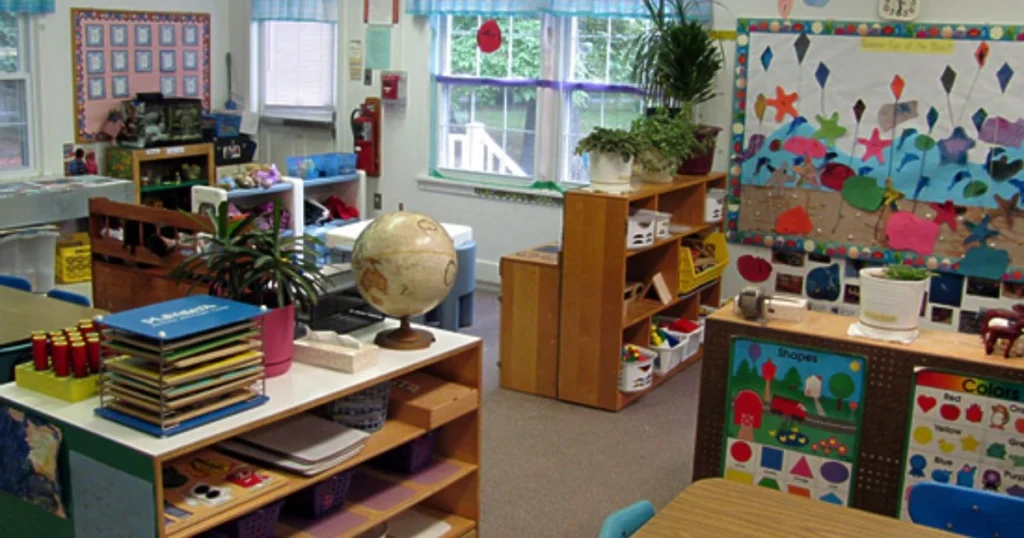
2. Learning Centers
The classroom is divided into intentional areas.
| Center | Purpose | Skills Developed |
| Block Area | Building structures | Math, spatial thinking |
| Art Area | Creative expression | Fine motor skills |
| Dramatic Play | Pretend roles | Language, empathy |
| Library | Books & storytelling | Literacy |
| Writing Center | Drawing & letters | Pre-writing skills |
| Science Table | Exploration | Observation |
The environment itself becomes a teacher.
3. Study-Based Projects
Instead of random weekly themes, teachers guide in-depth studies.
Examples:
- Buildings
- Trees
- Water
- Clothing
- Transportation
- Pets
These studies last several weeks and connect across subjects.
Real-Life Example #1: The “Buildings Study”
A preschool class becomes fascinated by construction outside their school.
The teacher observes their interest and begins a Buildings Study.
Children:
- Visit the site (with safety rules)
- Interview a construction worker
- Build tall towers with blocks
- Measure heights using cubes
- Draw blueprints
- Label “door,” “roof,” and “window”
Subjects integrated naturally:
- Math (measurement)
- Literacy (vocabulary)
- Science (materials)
- Social-emotional learning (teamwork)
No forced worksheets.
Real learning happens.
Real-Life Example #2: Homeschool Application
A parent notices their 4-year-old constantly talking about cooking.
Instead of structured workbooks, they create a “Food Study.”
Activities include:
- Counting ingredients (math)
- Reading simple words (literacy)
- Following steps (executive functioning)
- Discussing nutrition (science)
- Pretend restaurant play (social skills)
Creative curriculum preschool works beautifully in homeschool settings.
Real-Life Example #3: A Teacher’s Shift
Ms. Amina taught traditionally for 8 years.
Her classroom had:
- Worksheets
- Letter drills
- Quiet sitting time
Children were restless.
After transitioning to creative curriculum preschool:
- Engagement increased.
- Behavior issues dropped.
- Parents reported improved communication skills.
- Children showed deeper problem-solving ability.
Her biggest realization?
Children behave better when learning feels meaningful.
Whole-Child Development Explained
Creative curriculum preschool supports every area of development.
| Development Area | What It Builds | Example |
| Social-Emotional | Confidence & empathy | Group projects |
| Cognitive | Thinking & reasoning | Problem-solving tasks |
| Language | Vocabulary growth | Storytelling |
| Physical | Coordination | Cutting & climbing |
| Literacy | Early reading | Letter exploration |
| Math | Counting & patterns | Sorting activities |
Learning is integrated, not isolated.
Common Mistakes (And How to Avoid Them)
Even strong programs can fail without balance.
| Mistake | Why It Happens | Solution |
| Too much “free play” | Misunderstanding structure | Keep clear daily routine |
| Over-directing play | Fear of chaos | Ask guiding questions |
| Ignoring documentation | Time pressure | Use quick observation notes |
| Rushing academics | Parent expectations | Educate families on development |
Creative curriculum preschool requires intention.
Teacher Perspective
Teachers often say:
“It feels more natural.”
Benefits include:
- Deeper engagement
- Authentic assessment
- Less behavioral stress
- More creativity in teaching
However, it requires:
- Planning
- Observation skills
- Flexibility
Parent Perspective
Parents sometimes worry:
“Will my child be ready for kindergarten?”
When explained clearly, they see:
- Stronger communication skills
- Improved independence
- Better emotional regulation
- Natural academic growth
Communication builds trust.
Student Perspective
Children feel:
- Excited to attend school
- Proud of their projects
- Safe to ask questions
- Confident solving problems
Learning becomes joyful.
Age-Wise Focus in Creative Curriculum Preschool
| Age | Development Focus | Example Activities |
| 3 Years | Sensory exploration | Sand & water play |
| 4 Years | Cooperation | Group block building |
| 5 Years | Planning & reasoning | Designing projects |
Each stage builds progressively toward kindergarten readiness.
How to Successfully Apply Creative Curriculum Preschool?
Step 1: Build Emotional Safety
Children learn best when they feel secure.
Step 2: Create Rich Learning Centers
Use open-ended materials.
Step 3: Observe Before Teaching
Watch what interests children.
Step 4: Ask Open-Ended Questions
Instead of: “Is that a house?”
Ask: “How did you build this?”
Step 5: Reflect and Adjust
Review weekly:
- What worked?
- What didn’t?
- What engaged children most?
Frequently Asked Questions
1. Is creative curriculum preschool just play?
No. It is structured, intentional, and aligned with early learning standards.
2. Does it support early literacy?
Yes. Through storytelling, labeling, vocabulary building, and conversation.
3. How are children assessed?
Through:
- Observation
- Portfolios
- Work samples
- Developmental checklists
4. Can it work in small schools?
Absolutely. It works in:
- Public preschools
- Private schools
- Home-based programs
- Homeschool environments
5. What if parents prefer worksheets?
Educate them. Show evidence of learning through documentation.
Tips for Students
- Explore new ideas.
- Ask lots of questions.
- Try building different things.
- Work together with friends.
- Don’t fear mistakes—they help you grow.
Conclusion: Why Creative Curriculum Preschool Truly Matters
Creative curriculum preschool respects childhood.
It does not rush development.
It does not ignore academic growth.
It does not sacrifice structure.
Instead, it balances:
- Play and purpose
- Freedom and guidance
- Curiosity and skill-building
When implemented with care, it creates confident learners who:
- Think independently
- Communicate clearly
- Collaborate effectively
- Approach learning with joy
3 Key Takeaways
- Play-based learning builds strong foundations.
- Structure and flexibility must work together.
- Observation reveals real progress better than constant testing.
Creative curriculum preschool does more than prepare children for kindergarten.
It prepares them for lifelong learning—with curiosity, confidence, and courage.
Flash Topic