Continuous Curriculum School: A Beginner’s Guide for Everyone
A Smarter Way to Build Strong Skills and Confident Learners
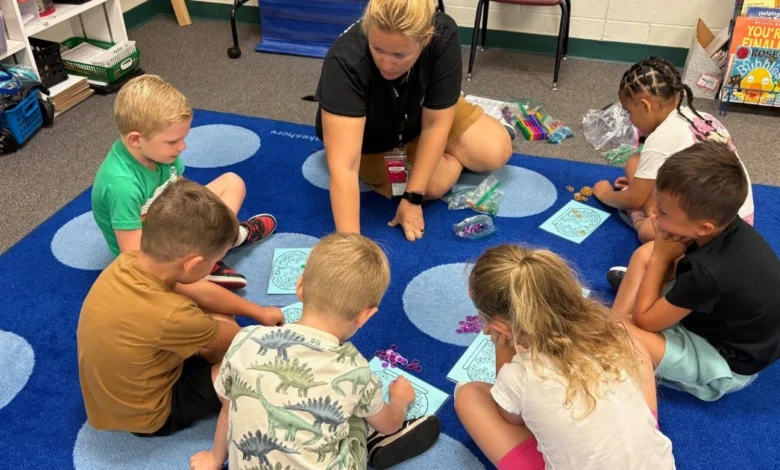
A continuous curriculum school is a type of school where learning flows smoothly across grades. Students don’t feel lost when they move up because every new topic connects to what they already know.
Many students struggle to keep up in traditional schools because each grade is treated like a fresh start. Teachers often find themselves re-teaching old lessons, and parents get worried when children lose confidence. Continuous curriculum schools solve these problems.
This topic is part of the complete guide on the importance of curriculum in education.
Why Students Struggle in Traditional Schools?
Imagine this:
- Maya, a Grade 5 student, did well in fractions in Grade 4. But when she moved to decimals in Grade 5, she struggled. She felt confused and frustrated.
- Rohan, in Grade 6, didn’t fully understand multiplication. In his science class, he couldn’t solve measurement problems because the math concepts weren’t strong.
These are common problems in traditional schools where learning is isolated per grade. If students don’t fully grasp a concept, it doesn’t come up again, creating gaps that grow over time.
Continuous curriculum schools tackle this by making every lesson part of a bigger, connected journey. Students build on their knowledge gradually, and nothing feels disconnected or rushed.
What Is a Continuous Curriculum School?
Simply put, it’s a school where:
- Concepts are revisited in higher grades
- Students move forward only when ready
- Learning is connected across subjects
- Teachers and parents track progress continuously
Example:
In a traditional school, Grade 3 students learn multiplication and move on. In a continuous curriculum school, multiplication comes back in Grade 4 and 5, linked with fractions, decimals, and word problems. By the time students reach Grade 6, multiplication is second nature.
Related Terms You Might Hear:
- Mastery-based learning
- Seamless learning
- Progressive curriculum
- Holistic education
How Continuous Curriculum Schools Work?
Let’s walk through a typical year:
Step 1: Assess What Students Already Know
Teachers check each child’s skills before starting new topics. It’s not about scores; it’s about understanding.
Example:
- Aarav enters Grade 6. The teacher notices he struggles with decimals. Instead of moving on, she gives him exercises to strengthen decimals before teaching percentages.
Mini Anecdote:
Mrs. Mehta, a Grade 4 teacher, uses a simple “skills map” to track each student. She discovered that half her class had weak multiplication skills. She spent a few weeks revisiting multiplication with games and group activities. By the end of the term, all students felt confident.
Step 2: Connect Lessons Across Subjects
Subjects are no longer isolated. Math, science, and English lessons are linked for better understanding.
Example:
- During a science lesson about plants, students measure water in fractions and use percentages to track growth. Suddenly, math makes sense in real life!
Table 1: Example of Subject Integration Across Grades
| Grade | Math Focus | Science Focus | English Focus |
|---|---|---|---|
| 3 | Multiplication | Plants | Simple sentences |
| 4 | Fractions | Ecosystems | Paragraphs |
| 5 | Decimals | Human body | Short essays |
| 6 | Percentages | Physics basics | Research writing |
| 7 | Ratios & Graphs | Energy & Forces | Creative writing |
Step 3: Track Progress Continuously
Students aren’t left to wait for exams. Teachers check understanding weekly through:
- Mini-quizzes
- Class projects
- One-on-one check-ins
Example:
Riya, homeschooled, revisits tricky math and English topics weekly. Her mom adjusts lessons based on how well she understands each concept.
Step 4: Provide Support and Challenge
Struggling students get help, while advanced students get enrichment tasks.
Example:
- In a Grade 8 coding class, students who understand basics get mini-projects to create games. Students who need more help get extra guidance on loops and variables. Everyone progresses confidently.
Real-Life Examples

1. Classroom Story
Mrs. Sharma, a Grade 5 teacher, noticed her students were weak in multiplication. Instead of moving on, she connected multiplication with fractions and division over the next year. Students gradually built confidence and were ready for higher-level math without stress.
2. Homeschool Story
Riya’s mom follows a continuous curriculum plan. Each week, Riya revisits topics she struggled with. Now, Riya enjoys studying and feels confident tackling new lessons.
3. School System Example
At Greenfield Continuous Learning School, science experiments in Grade 3 connect to theory lessons in Grade 4. Students understand the “why” behind each concept, not just memorize facts.
Age-Wise Continuous Curriculum Plan
Table 2: Learning Progression by Age
| Age | Focus Areas | Skills Developed |
| 6-7 | Reading, Basic Math | Numbers, letters, basic reasoning |
| 7-8 | Addition, Subtraction | Problem solving, sentences |
| 8-9 | Multiplication, Fractions | Logic, comprehension |
| 9-10 | Decimals, Simple Science | Observation, analysis |
| 10-11 | Percentages, Ecosystems | Application, critical thinking |
| 11-12 | Algebra basics, Physics | Integrating ideas, problem solving |
Mini-Tip for Parents:
Use a simple notebook or app to track your child’s progress weekly. It helps catch small gaps before they grow.
Common Mistakes and How to Avoid Them
Even continuous curriculum schools make mistakes if implemented poorly.
Table 3: Mistakes vs Solutions
| Mistake | How to Fix It |
| Skipping foundational concepts | Regular assessments to identify gaps |
| Overloading students | Break lessons into small, digestible steps |
| Ignoring student pace | Individualized learning plans |
| Teachers not trained | Ongoing professional development |
| Parents not involved | Regular progress updates and guidance |
Real-Life Example:
At a school implementing continuous curriculum, one class moved too quickly through fractions. Students struggled later with decimals. The school fixed this by creating weekly review sessions. By the end of the term, students had caught up.
Perspectives from Teachers, Parents, and Students
Teacher Perspective
“Continuous curriculum makes planning simpler. I know exactly what each student learned last year, so I can focus on growth instead of repeating content,” – Mr. Raj, Grade 6 teacher.
Parent Perspective
“It’s comforting to see my child revisiting topics she struggled with before. I can help her at home and I know exactly where she stands,” – Mrs. Fernandes.
Student Perspective
“I like that everything connects. I don’t feel lost, and learning feels easier,” – Aarav, 10 years old.
Continuous Curriculum vs Traditional Curriculum
| Feature | Continuous Curriculum | Traditional Curriculum |
| Learning Flow | Smooth, connected | Starts fresh each year |
| Skill Retention | High, revisited often | Often forgotten |
| Student Pace | Flexible | Same for everyone |
| Teacher Planning | Strategic, cumulative | Yearly, repetitive |
| Parent Involvement | Regular and informed | Limited |
Step-by-Step Weekly Example for a Continuous Curriculum Class
Table 4: Week Plan for Grade 5 Math & Science Integration
| Day | Activity | Objective |
| Mon | Review fractions | Strengthen previous knowledge |
| Tue | Science experiment with measurement | Apply fractions in real-world context |
| Wed | Decimal exercises | Gradual progression from fractions |
| Thu | Story writing using measurements | Connect math with English |
| Fri | Quiz + Reflection | Track understanding and gaps |
Parent Tip:
Sit with your child for 10 minutes each Friday to discuss what they learned. It reinforces retention and helps teachers see where gaps remain.
A continuous curriculum school helps students learn step by step without repeating old topics every year. In a continuous curriculum school, each lesson builds on the one before, making it easier for students to understand and remember what they learn. Many parents choose a continuous curriculum school because it keeps children motivated and ensures steady progress throughout their education.
Tips for Students
- Review past lessons regularly; don’t cram.
- Ask questions when something feels unclear.
- Use charts, drawings, and mini-notes to connect concepts.
- Set small goals and celebrate progress.
- Focus on understanding, not memorizing.
[FAQ‘s]
Q1: Is continuous curriculum suitable for all students?
Yes! It helps slower learners catch up and keeps advanced students engaged.
Q2: How is it different from year-round schooling?
Year-round schooling changes the calendar but doesn’t fix gaps. Continuous curriculum ensures mastery across grades.
Q3: Can homeschoolers follow it?
Absolutely! Parents can track learning step by step and revisit tricky topics whenever needed.
Q4: How do teachers manage ongoing assessments?
Small quizzes, projects, and observations replace one-off exams, giving real-time feedback.
Q5: Does it improve long-term learning?
Yes. Revisiting topics over time strengthens understanding and confidence.
Q6: How do parents support continuous curriculum at home?
- Track weekly progress
- Review tricky topics together
- Encourage small projects connecting subjects
Conclusion
Continuous curriculum schools make learning smooth, connected, and enjoyable. Students master skills, teachers teach more efficiently, and parents can follow progress easily.
Key Takeaways:
- Learning gaps shrink because every concept builds on the last.
- Students move at a pace suited to them, with support or challenges as needed.
- Collaboration between teachers, parents, and students is essential.