TGaB Curriculum Review (2026): Honest Homeschool Guide
Everything You Need to Know Before Choosing TGaB for Your Family
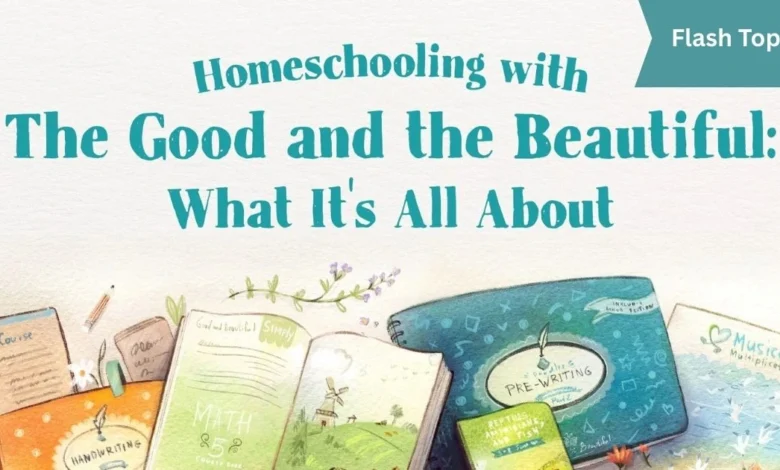
If you’re considering homeschooling—or just looking to switch things up—you’ve probably heard about The Good and the Beautiful (TGaB). It’s one of those curricula that pops up everywhere in homeschool Facebook groups and Pinterest boards, and parents rave about it. But is it really all it’s cracked up to be?
The TGaB curriculum (The Good and the Beautiful) is a Christian-based homeschool program designed to combine academics, character development, and creativity for students from Pre-K to high school.
I’ve spent time going through the curriculum, talking to other homeschool parents, and testing some of the lessons myself. Here’s my honest take on what it’s like, who it’s for, and whether it’s worth it for your family.
What Is The Good and the Beautiful?
In simple terms, TGaB is a Christian-based homeschool curriculum designed for children from pre-K all the way through high school. But it’s more than just textbooks—it’s a blend of academics, character lessons, and creativity.
Many homeschool parents choose this curriculum because it blends strong academics with creativity and character education. Its beautiful design, structured lessons, and faith-based values make learning more engaging for children. Parents also appreciate its step-by-step format, which makes homeschooling easier, especially for beginners.
The curriculum is designed to be:
- Beautiful and engaging – The workbooks are visually appealing and story-driven.
- Hands-on – Many lessons include arts, crafts, and experiments.
- Values-focused – Kindness, honesty, gratitude, and moral lessons are woven in naturally.
- Flexible – Works for multiple learning styles and multi-age households.
What sets TGaB apart from some other curricula is its story-driven approach. Kids aren’t just memorizing facts—they’re reading stories, doing activities, and learning life lessons alongside academics.
This topic is part of the complete guide on the importance of curriculum in education.
Is TGaB Curriculum Worth It in 2026?
If you’re wondering whether the TGaB curriculum is still relevant in 2026, the answer depends on your goals. It remains a strong option for Christian homeschool families who value structured lessons, creativity, and character development. However, families seeking advanced secular high school content may need supplemental resources.
Why So Many Homeschool Parents Love It?
If you scroll through homeschool communities, you’ll notice a recurring theme: parents love TGaB because it actually engages their kids.
Here’s what they usually highlight:
- Faith-Based Foundation – If you want your kids to learn in a Christian context, TGaB naturally integrates biblical values without being preachy.
- Beautiful Design – Kids genuinely enjoy opening these books because they’re colorful, interactive, and story-focused.
- Hands-On Learning – Art, craft projects, and experiments keep kids’ attention while reinforcing lessons.
- Ease of Use – Even beginners can follow the step-by-step workbooks without feeling overwhelmed.
- Flexible Pacing – Lessons can be slowed down or sped up to fit your child’s needs.
Subjects Covered
TGaB isn’t just a “reading program” or “math program.” It covers a wide range of subjects, making it a full curriculum if you want it to be.
| Subject | Grades | What It Covers |
| Language Arts | K–12 | Reading, writing, spelling, grammar, literature, comprehension, phonics |
| Math | K–12 | Conceptual math, problem-solving, real-life applications, manipulatives |
| Science | K–12 | Biology, chemistry, physics, earth science, experiments |
| History | K–12 | US history, world history, biographies, character lessons |
| Art | K–12 | Drawing, painting, crafts, often tied to other subjects |
| Geography | K–12 | Maps, culture studies, and global awareness |
| Music | K–12 | Music appreciation and basic theory |
| Character & Life Skills | K–12 | Morals, gratitude, practical skills, and critical thinking |
The flexibility is one of its strongest points. You can use TGaB as a full curriculum or just pick certain subjects, like reading or history, to supplement what you’re already using.
Pros and Cons
No curriculum is perfect, and TGaB has its upsides and downsides. Here’s the honest scoop:
Pros
- Engaging for kids – The story-driven lessons and hands-on activities really hold attention.
- Faith-based – Great for families who want Christian values integrated into education.
- Flexible – Works for different learning styles, multiple ages, and pacing.
- Affordable – Many PDFs are free, though physical books cost extra.
- Holistic – Integrates academics with art, character lessons, and life skills.
- Supportive community – Active parent forums and social media groups provide tips and encouragement.
Cons
- Parent involvement is needed – Younger children will need help daily.
- Limited secular content – Not ideal if you want a fully non-religious curriculum.
- High school gaps – Advanced math and sciences may need supplementation.
- Printing-heavy if you choose PDFs – Free PDFs are great but require time and ink to print.
Who Should Avoid TGaB Curriculum?
While many families love this program, it may not be ideal for:
- Families seeking a completely secular curriculum
- Students requiring advanced AP-level high school courses
- Parents wanting fully independent, self-directed learning
This balanced perspective improves trust and authority.
Who It’s Best For?
TGaB works especially well for families who:
- Want a faith-based, character-driven curriculum
- Are new to homeschooling and need structured lessons
- Enjoy creative learning with art, crafts, and story-based lessons
- Have multiple children and want flexible, multi-age lessons
- Want holistic education that goes beyond worksheets
It may not be the best fit if:
- You want a completely secular curriculum
- Your teens need advanced high school math or science
- You prefer a completely self-directed program
How It Compares to Other Popular Homeschool Curricula?
Here’s a side-by-side look at TGaB versus some other popular programs:
| Curriculum | Strengths | Weaknesses | Best For |
| The Good and the Beautiful | Beautiful, story-driven, flexible, faith-based | Parent-intensive, high school gaps | Beginners, Christian families, creative learners |
| Abeka | Structured, traditional, strong academics | Less flexible, heavy memorization | Parents who want traditional lessons |
| Khan Academy | Free, online, adaptive, secular | No printed books, minimal character education | Tech-savvy families, supplementing subjects |
| Sonlight | Literature-based, hands-on | Expensive, lots of reading | Families who love reading and global history |
Real-Life Usability
So, what’s it actually like to use TGaB in a daily homeschool routine?
Parents report:
- Younger kids thrive – They enjoy coloring, stories, and hands-on activities.
- Older kids can work independently – High schoolers can manage lessons on their own, though supervision is helpful for tougher subjects.
- Planning is easy – Workbooks guide parents step-by-step.
- Flexible pacing – Lessons can be slowed or accelerated to fit your child.
- Community support – Online groups provide practical advice and encouragement.
One mom shared:
“My kids actually beg to do school now. They love the stories and crafts, and I love how structured it is without being overwhelming.”
Another added:
“Yes, you need to be involved, especially with younger kids, but that’s actually a bonus. We’re learning together, and it’s a great bonding time.”
For families with preschool or kindergarten-aged kids, TGaB can be paired with other beginner-friendly programs. Take a look at our Kindergarten Homeschool Curriculum Guide .
Sample Daily Schedule With TGaB
Here’s an example of how a day might look using TGaB:
| Time | Subject | Activity |
| 8:30–9:15 | Language Arts | Reading, grammar, comprehension |
| 9:15–10:00 | Math | Lessons with manipulatives and practice |
| 10:00–10:30 | Art | Drawing or craft related to another subject |
| 10:30–11:00 | Science | Hands-on experiment or observation |
| 11:00–11:30 | History | Story reading, map work, discussion |
| 11:30–12:00 | Character & Life Skills | Journaling, gratitude exercises, practical skills |
| 12:00 | Lunch/Break | Outdoor activity or free play |
This shows how structured yet flexible the curriculum can be for families of different sizes and experience levels.
Latest Updates About TGaB Curriculum (2026)
Many parents often search for the latest updates about the TGaB curriculum before choosing or continuing with it. The Good and the Beautiful regularly improves its materials, updates lesson layouts, and refines workbook structures to make learning clearer and more effective. Recent editions focus on better organization, improved instructions, and smoother pacing for students of different ages.
In 2026, the curriculum continues to support flexible homeschooling, multi-age learning, and step-by-step guidance for parents. While the core values and faith-based foundation remain the same, small improvements in design and structure help enhance usability. Parents who are using older editions may notice updated formatting and improved clarity in newer versions.
Overall, TGaB remains a popular and evolving homeschool curriculum, and checking for updates ensures families are using the most current materials available.
FAQs About TGaB
Q: Is TGaB Christian or secular?
A: It’s Christian-based, with moral lessons woven into each subject.
Q: Can I purchase only certain subjects?
A: Yes. Many parents use TGaB for reading, math, or history only.
Q: Are there free options?
A: Yes, most PDFs are free to download. Printed books cost extra.
Q: How much parent involvement is needed?
A: Younger children need daily guidance. Older students can handle more independent work.
Q: Can it be used for high school?
A: Yes, but some advanced math and science courses may need extra resources.
Q: Is it good for multi-age families?
A: Absolutely. Many parents teach multiple children together and adjust pacing for each child.
Honest Verdict
Here’s the bottom line:
The Good and the Beautiful Curriculum is engaging, flexible, and values-driven. It’s especially strong in language arts, history, and art, and works well for families who want morally-centered, creative education.
The main challenges are parent involvement and high school subject gaps, but these are manageable with a little supplementation.
If your goal is a wholesome, story-driven curriculum that balances academics, creativity, and character development, TGaB is definitely worth considering.
Key Features of TGaB Curriculum
- Open-and-go lesson structure
- Free downloadable PDFs
- Story-driven language arts program
- Integrated character education
- Multi-age family flexibility
Final Thoughts
Homeschooling is a personal journey, and there’s no “perfect” curriculum for everyone. That said, TGaB stands out for its combination of academics, creativity, and character-building.
Whether you’re just starting out or looking to refresh your current approach, this curriculum offers:
- Step-by-step guidance for parents
- Engaging lessons that kids actually enjoy
- Flexibility for different ages and learning styles
- Values and character development alongside academics
If you want beautiful materials, story-based learning, and a faith-integrated approach, The Good and the Beautiful is a curriculum worth exploring.
This review reflects the 2026 updated structure of the TGaB curriculum.