Complete Grade 5 Curriculum Guide for Students, Parents & Teachers
Step-by-Step Guide to Help Students Master Every Subject in Grade 5

The complete curriculum grade 5 is a step-by-step plan to help students master subjects, gain confidence, and enjoy learning. This guide shows parents, teachers, and students how to organize lessons, practice skills, and apply knowledge in real life without feeling overwhelmed.
Many fifth graders feel stressed juggling homework, projects, and new topics. Parents often wonder if their child is keeping up. Teachers struggle to keep lessons engaging for everyone. This guide simplifies it all, making learning structured, practical, and fun.
Following the Complete Curriculum Grade 5 is very beneficial for students. The reason is that it is important to understand the value of the curriculum. For this, you can also check our pillar content Importance of Curriculum in Education, which provides a detailed guide for students, teachers, and parents.
What Is a Complete Grade 5 Curriculum?
A complete grade 5 curriculum is like a roadmap for the whole school year. It tells you what subjects to study, which skills to develop, and how to practice them in real life.
Core Subjects Include:
- Math: Fractions, decimals, percentages, geometry, word problems, and basic algebra
- English: Reading comprehension, grammar, creative writing, vocabulary, and speaking skills
- Science: Life sciences, earth sciences, physical science, and experiments
- Social Studies: History, geography, civics, and cultural awareness
- Arts & PE: Drawing, crafts, music, sports, and health education
Example: Mrs. Patel’s students measured ingredients to bake cookies while learning fractions. Math became a real-life, hands-on activity.
Benefits of Following a Complete Grade 5 Curriculum
| Benefit | How It Helps | Real-Life Example |
| Strong Foundation | Concepts build step by step | Fractions first make decimals easier to understand |
| Organized Learning | Covers all subjects without gaps | Parents can check off weekly topics |
| Critical Thinking | Encourages problem-solving | Science experiments make students ask “why?” and “how?” |
| Confidence | Students feel prepared for tests | Completing weekly reading or math challenges builds pride |
| Real-Life Connection | Lessons apply outside the classroom | Geography lessons become fun when mapping the neighborhood |
Teacher insight: Following a clear curriculum allows teachers to focus on how to teach, not just what to teach, making learning more effective.
How to Use the Grade 5 Curriculum Step by Step?
Step 1: Organize by Subject
Separate Math, English, Science, Social Studies, Arts, and PE. This keeps lessons structured and manageable.
To efficiently plan and organize topics for each subject, check out our Curriculum Map Examples Elementary guide.
Step 2: Break It Down Weekly
Large topics can overwhelm students. Example Math schedule:
- Week 1: Fractions
- Week 2: Adding & subtracting fractions
- Week 3: Decimals
- Week 4: Word problems
Step 3: Mix Theory With Practice
Reading, writing, or memorizing isn’t enough. Include projects, experiments, and exercises to make learning hands-on.
Step 4: Track Progress
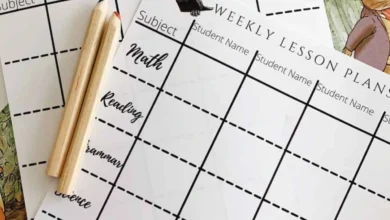
Use a planner, checklist, or notebook. Crossing off completed topics motivates students and shows parents what’s done.
Step 5: Review Regularly
Short daily or weekly reviews reinforce knowledge and prevent forgetting.
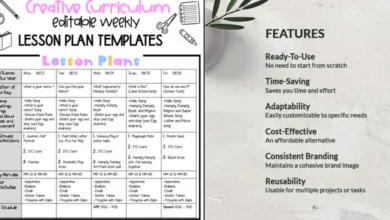
| Subject | Topics | Weekly Plan | Activity Example |
| Math | Fractions, Decimals, Geometry | Mon: Fractions, Tue: Decimals, Wed: Geometry, Thu: Practice, Fri: Quiz | Bake cookies to measure fractions |
| English | Reading, Writing, Grammar | Mon: Reading, Tue: Vocabulary, Wed: Writing, Thu: Grammar, Fri: Storytelling | Write a short story about a superhero |
| Science | Life, Earth, Physical Science | Mon: Life Science, Tue: Experiments, Wed: Earth Science, Thu: Review, Fri: Lab Activity | Plant seeds and track growth |
| Social Studies | History, Geography, Civics | Mon: History, Tue: Map Skills, Wed: Civics, Thu: Current Events, Fri: Quiz | Draw a map of your neighborhood and label landmarks |
Student example: Liam enjoys ticking off topics on his checklist. It gives him a sense of achievement and keeps him motivated.
Real-Life Curriculum Examples

Classroom: Students built a mini-ecosystem to learn how plants and animals interact. Learning came alive.
Homeschool: Parents scheduled reading, math games, and creative projects. Students learned at their own pace while staying engaged.
Teacher: Mr. Singh’s “Space Week” included science (solar system), math (planet distances), and English (writing as an astronaut). Students loved it, and lessons stuck.
Common Mistakes and How to Avoid Them
| Mistake | Why It Happens | How to Fix |
| Skipping basics | Students rush through topics | Start slow and master fundamentals first |
| Overloading lessons | Trying to cover too much in a day | Stick to 2–3 topics max per day |
| Ignoring practice | Thinking theory is enough | Include exercises, quizzes, and mini-projects |
| No progress tracking | Parents/teachers forget to check | Use a checklist, planner, or journal |
| Focusing only on exams | Learning becomes stressful | Balance learning with fun projects and experiments |
Parent tip: Encourage your child to ask questions and explore topics beyond the textbook. Real-life applications make learning meaningful.
Teacher, Parent, and Student Perspectives
Teacher: A clear curriculum reduces planning stress and allows interactive lessons.
Parent: Knowing what to teach each week gives confidence and reduces overwhelm.
Student: Lessons are more enjoyable when they include stories, experiments, and achievable goals.
Example: Ana learned decimals while cooking. She practiced math, applied it, and even helped her mom—learning became natural.
Following the complete curriculum grade 5 is essential for students to build a strong foundation in all subjects. The complete curriculum grade 5 helps parents and teachers plan lessons efficiently and ensures no topic is left behind. With the complete curriculum grade 5, students can organize their study time and understand concepts step by step.
Using the complete curriculum grade 5, teachers can design interactive lessons that make learning enjoyable. Homeschoolers also benefit greatly from the complete curriculum grade 5, as it provides a clear weekly plan for each subject. One of the major advantages of the complete curriculum grade 5 is that it integrates practical projects and exercises to reinforce learning. By following the complete curriculum grade 5, students gain confidence, improve critical thinking, and are fully prepared for exams. Overall, the complete curriculum grade 5 is a comprehensive guide that ensures students succeed academically and enjoy the process of learning.
Pro Tips for Success
- Read daily for at least 20 minutes
- Use visual aids and flashcards
- Encourage group activities and discussions
- Maintain a balanced schedule with arts, sports, and recreation
- Use educational apps or videos for interactive learning
Tips for Students
- Break big topics into small, manageable chunks
- Practice math and grammar daily
- Ask questions and discuss topics with teachers, parents, or friends
- Keep a journal to track progress
- Apply learning through small projects in real life
[FAQ‘s]
1. How long should a fifth grader study daily?
2–3 hours, split across subjects with breaks in between.
2. Are projects necessary?
Yes, they build critical thinking, creativity, and practical skills.
3. Can homeschoolers follow this curriculum?
Absolutely. It’s flexible for classrooms, homeschooling, and self-study.
4. How to help students struggling in math?
Use visual aids, real-life examples, step-by-step guidance, and daily practice.
5. How can lessons be interactive?
Include group work, experiments, quizzes, games, and educational videos.
6. Can the curriculum be adjusted for different learning speeds?
Yes. Teachers and parents can provide extra practice or enrichment as needed.
Conclusion
The complete curriculum grade 5 makes learning structured, practical, and enjoyable. With weekly plans, hands-on projects, and real-life examples, students gain knowledge, confidence, and skills.
The Grade 5 curriculum not only teaches children knowledge and skills but also enhances their creative thinking, problem-solving abilities, and self-confidence.
3 Key Takeaways:
- Follow weekly plans consistently and revise regularly
- Use hands-on learning through projects and experiments
- Track progress and adjust the pace according to student needs
Flash Topic