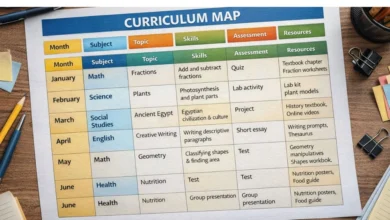
Syllabus vs Curriculum: Key Differences Every Student and Parent Must Know
Syllabus vs Curriculum: Key Benefits for Students, Parents & Teachers
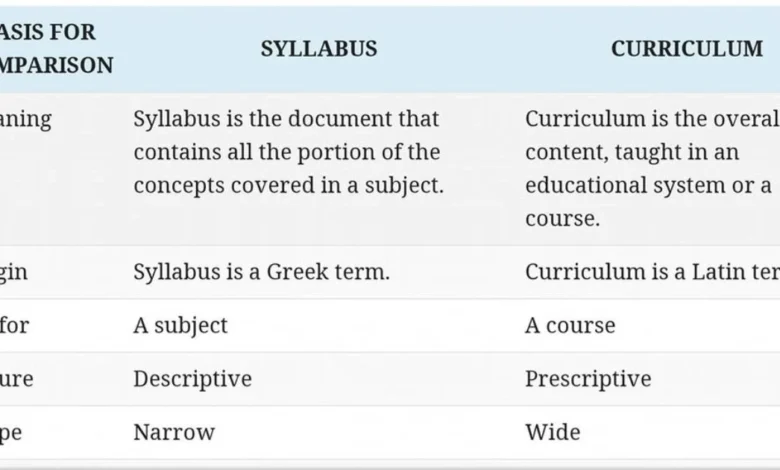
Syllabus vs curriculum means the difference between the topics you study in one subject and the complete learning plan a school designs for your whole education. Simply put — the syllabus tells you what chapters to read, while the curriculum shapes who you become as a learner.
If you’ve ever heard a teacher say,
“Follow the syllabus — it’s part of the curriculum,”
and quietly thought, Wait… aren’t they the same thing?
You’re not alone.
Almost every student, parent, and even some new teachers mix these two up.
This topic is part of the complete guide on the importance of curriculum in education.
Let’s clear it up — in the simplest way possible.
A Quick Story (You’ll Relate to This)
A parent once asked during a school meeting:
“Why does my child study art, sports, and group projects when exams only ask from books?”
The teacher smiled and said:
“That’s the curriculum working — not just the syllabus.”
Understanding syllabus vs curriculum is crucial for every student, teacher, and parent. Many people confuse syllabus vs curriculum, thinking they are the same, but they serve different purposes. When planning a school year, teachers first look at the curriculum, then create a syllabus, which is why knowing the difference in syllabus vs curriculum helps students study more effectively. Parents can also guide their children better when they understand syllabus vs curriculum, especially during exams. Even in homeschooling or extra-curricular learning, following a clear syllabus vs curriculum ensures consistent progress. Ultimately, mastering syllabus vs curriculum allows everyone to focus on both learning objectives and practical skills.
What Is a Curriculum? (Think Big Picture)
Let’s keep it simple.
The curriculum is the full education experience planned for students.
Not just books.
Not just exams.
Not just subjects.
It includes:
- What students learn
- How they learn
- Why they learn
- How they grow as people
In everyday words:
Curriculum = the full learning journey
It decides:
- Which subjects exist
- What skills students should develop
- How teachers teach
- How students are assessed
Imagine This…
Education is like building a house.
Curriculum = the whole house design
Syllabus = each room’s blueprint
Both are needed — but they are not the same.
Real classroom example
A school curriculum may aim to:
✔ Make students confident speakers
✔ Teach teamwork
✔ Build problem-solving skills
So they include:
- Group projects
- Presentations
- Practical experiments
- Discussions
Even when these don’t appear directly in exams.
That’s curriculum at work.
What Is a Syllabus? (Your Study Map)
Now let’s talk about the syllabus — the part students know best.
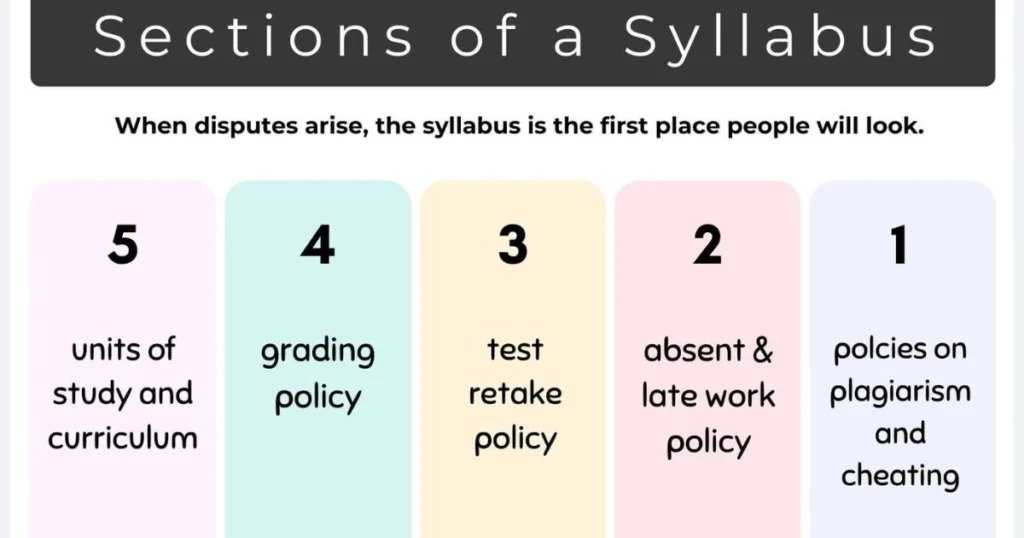
A syllabus is a detailed plan for one subject.
It tells you:
What topics you’ll study
When you’ll study them
How you’ll be tested
Simple way to remember:
Curriculum = whole education plan
Syllabus = subject-wise study plan
Student life example
In English class, the syllabus may include:
- Grammar units
- Stories
- Essay writing
- Reading tasks
That’s the English syllabus.
Math has its own syllabus.
Science has another.
All together — they form the curriculum.
Syllabus vs Curriculum (Let’s Make It Super Clear)
| Think of it like this | Curriculum | Syllabus |
| Size | Big picture | Small part |
| Covers | Whole education | One subject |
| Focus | Growth + skills + learning | Topics + exams |
| Who plans it | Boards & schools | Teachers/institutions |
| Time span | Many years | One term/year |
One easy sentence:
Curriculum is the whole meal.
Syllabus is one dish on the plate.
Why Schools Don’t Teach Only Syllabus?
Many students ask:
“Why do we do activities not in exams?”
Because life doesn’t run on exams.
Curriculum prepares students for:
✔ Thinking
✔ Working with others
✔ Solving problems
✔ Communicating
✔ Adapting
The syllabus supports this by giving subject knowledge.
Real-Life Learning Examples
Student Example
The curriculum wants students to think logically.
Math syllabus includes:
- Word problems
- Logical puzzles
- Equations
So students build thinking skills while studying chapters.
Teacher Example
Curriculum goal: communication skills
English syllabus includes:
- Speeches
- Storytelling
- Writing practice
Homeschool Parent Example
Curriculum plan:
- Academics + life skills
Syllabus:
- Weekly reading topics
- Math lessons
- Science activities
How Curriculum and Syllabus Work Together?
They are not competing.
They are partners.
The curriculum sets the destination.
The syllabus shows the road.
Common Confusions (And Easy Fixes)
| Confusion | Why it Happens | Simple Fix |
| “They’re the same thing” | Similar words | Remember: syllabus is inside curriculum |
| Only caring about exams | Pressure culture | Focus on skills too |
| Ignoring activities | Seen as extra | They build real abilities |
Teacher, Parent & Student Voices
Student
“Knowing my syllabus helps me pass exams.
Knowing curriculum helps me understand why I study.”
Teacher
“Syllabus guides lessons.
Curriculum guides life learning.”
Parent
“Curriculum shapes my child’s future.
Syllabus tracks today’s progress.”
Why Understanding This Makes You Smarter?
When you know the difference:
✔ You don’t panic about extra activities
✔ You study with purpose
✔ You respect skill learning
✔ You manage time better
Final Thoughts: Syllabus vs Curriculum Made Simple
Education is not just about finishing chapters.
It’s about building a capable human being.
Remember:
- Curriculum = full learning journey
- Syllabus = subject-wise content
- Both together create real education
Quick Tips for Students
✔ Read syllabus early
✔ Ask why topics matter
✔ Learn skills, not just answers
✔ Participate in activities
FAQs
1. Is syllabus part of curriculum?
Yes — it’s one part inside the bigger education plan.
2. Why does curriculum include activities?
To build life skills like teamwork and confidence.
3. Who controls syllabus?
Usually schools, teachers, or education boards.
4. Can curriculum change over time?
Yes — education evolves with society’s needs.
5.Do colleges have curriculum and syllabus?
Yes. Each course has a syllabus, and the degree program follows a curriculum.
Final Human Truth
When you understand syllabus vs curriculum, school stops feeling random.
You stop thinking:
“Why am I studying this?”
And start realizing:
“This is shaping my future.”
Key Takeaways: Syllabus vs Curriculum
- Syllabus tells what to study, curriculum shows what, why, and how.
- Syllabus is limited to one subject, curriculum covers the whole program.
- Knowing the syllabus helps focus on topics, curriculum ensures overall skill development.
- Syllabus is short-term, curriculum is long-term planning.
- Understanding both makes school feel purposeful, not random.
This article explains the key differences between syllabus and curriculum, showing how each guides learning, shapes skills, and helps students, teachers, and parents plan education effectively.