Curriculum Mapping: A Complete Beginner-Friendly Guide for Students, Teachers, and Parents
A Step-by-Step Guide to Curriculum Mapping for Better Learning
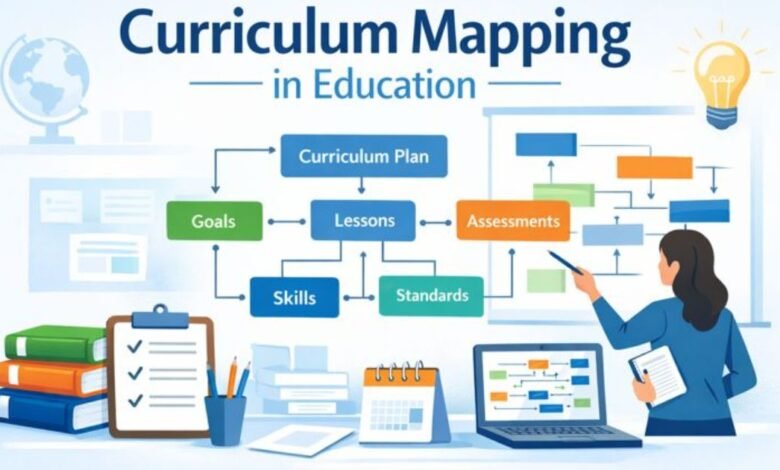
Curriculum mapping is a clear, organized process of planning what students learn, when they learn it, and how it is taught and assessed.
In simple words, curriculum mapping helps schools and teachers make sure learning is meaningful, connected, and not confusing or repetitive.
Introduction: Why Do So Many Students Feel Confused in School?
Have you ever felt like you studied the same topic again and again each year—but still didn’t fully understand it?
Or maybe you’re a teacher who wonders, “Did my students already learn this last year?”
Parents often ask, “Why is my child struggling when they seem to cover everything?”
These problems usually happen not because students or teachers are weak, but because learning is not properly planned across time.
This is exactly where Curriculum Planning comes in.
Curriculum Planning creates a big-picture view of learning so that every lesson, subject, and grade level connects smoothly. It brings clarity, balance, and purpose to education.
In this guide, you’ll learn:
- What curriculum mapping really means
- Why it matters for students, teachers, and parents
- How it works step by step
- Real-life classroom and homeschool examples
- Common mistakes and how to avoid them
Let’s start from the basics.
What Is Curriculum Mapping?
Curriculum Planning is a visual and written plan that shows:
- What is taught (content and skills)
- When it is taught (timeline or grade level)
- How it is taught (methods and activities)
- How learning is checked (assessments)
Think of it like a learning roadmap. Just like Google Maps helps you reach a destination without getting lost, Curriculum Planning helps students reach learning goals without confusion or gaps.
Simple Definition
Curriculum mapping is the process of organizing and aligning lessons, skills, and assessments across subjects and grade levels to improve learning outcomes.
Why Curriculum Mapping Is Important in Education
Without Curriculum Planning, education often becomes:
- Repetitive
- Disconnected
- Overloaded
- Unclear
With Curriculum Planning, learning becomes:
- Planned
- Progressive
- Balanced
- Meaningful
Key Benefits of Curriculum Mapping
| Without Curriculum Mapping | With Curriculum Mapping |
| Repeated topics | Logical learning progression |
| Learning gaps | Full skill coverage |
| Confused students | Clear expectations |
| Teacher guesswork | Aligned teaching |
| Stressful exams | Fair assessments |
Core Elements of Curriculum Mapping
To understand Curriculum Planning deeply, you need to know its building blocks.
1. Learning Objectives
These answer:
- What should students know?
- What should they be able to do?
Objectives are clear, measurable, and age-appropriate.
2. Content and Skills
This includes:
- Topics (math, science, language, etc.)
- Skills (reading, writing, problem-solving, critical thinking)
3. Teaching Methods
Examples:
- Lectures
- Group work
- Projects
- Experiments
- Discussions
4. Assessment Methods
How learning is checked:
- Quizzes
- Exams
- Projects
- Presentations
- Observations
Types of Curriculum Mapping (Explained Simply)
There isn’t just one way to do Curriculum Planning. Different schools use different approaches.
1. Diary Curriculum Mapping
Teachers record:
- What they actually taught
- What worked
- What didn’t
Best for reflection and improvement.
2. Projected Curriculum Mapping
Teachers plan:
- What they intend to teach
- When and how
Best for new courses or schools.
3. Consensus Curriculum Mapping
Teachers collaborate to agree on:
- What every student must learn
Best for consistency across classrooms.
Curriculum Mapping vs Lesson Planning (Important Difference)
Many beginners confuse these two. Let’s clear it up.
| Lesson Planning | Curriculum Mapping |
| Daily or weekly | Long-term (year/grades) |
| Focused on one class | Covers entire program |
| Individual teacher | School-wide or subject-wide |
| Short-term | Big-picture planning |
Education Mapping:
is the foundation; lesson planning builds on it.
Step-by-Step Process of Curriculum Mapping
Here’s a beginner-friendly breakdown.
Step 1: Identify Learning Goals
Start with:
- National or school standards
- Skills students must master
Step 2: Organize Content by Time
Decide:
- Which topics come first
- Which build on previous learning
Step 3: Align Teaching Methods
Choose:
- Best teaching strategies for each topic
- Activities that support understanding
Step 4: Plan Assessments
Ensure:
- Assessments match objectives
- Students are tested on what they actually learned
Step 5: Review and Improve
Curriculum maps are living documents.
They should be reviewed regularly.
Real-Life Examples of Curriculum Mapping
Example 1: Classroom Teacher (Grade 5 Math)
A math teacher maps:
- Fractions in Term 1
- Decimals in Term 2
- Percentages in Term 3
Each topic builds naturally on the previous one, avoiding confusion.
Example 2: Homeschool Parent
A homeschool parent uses Learning Roadmap to:
- Plan reading skills across the year
- Balance science, arts, and life skills
- Avoid overloading the child
Example 3: High School Student Perspective
A student benefits because:
- Exams reflect actual learning
- Topics connect logically
- No sudden “surprise” concepts appear
Age-Wise Curriculum Mapping Example
| Age Group | Focus Areas | Teaching Style |
| 5–7 years | Basics, curiosity | Play-based learning |
| 8–10 years | Skills & concepts | Activities & stories |
| 11–13 years | Application | Projects & discussions |
| 14–16 years | Critical thinking | Problem-solving |
| 17–18 years | Mastery & careers | Research & analysis |
Common Curriculum Mapping Mistakes (And How to Avoid Them)
| Common Mistake | Why It Happens | Solution |
| Overcrowded curriculum | Too many topics | Focus on essentials |
| No skill progression | Poor planning | Map skills year-wise |
| Ignoring assessments | Teaching mismatch | Align tests with goals |
| No collaboration | Working alone | Plan as a team |
Curriculum Mapping from Different Perspectives
Teacher Perspective
- Clear teaching direction
- Less stress
- Better student outcomes
Student Perspective
- Less confusion
- Better understanding
- Fair assessments
Parent Perspective
- Trust in the system
- Visible learning growth
- Balanced workload
How Curriculum Mapping Supports Modern Education
Education Mapping
supports:
- student-centered learning
- outcome-based education
- lesson alignment
- educational planning
- learning objectives
- assessment strategies
- instructional design
These bolded keywords are closely related and help improve both learning quality and SEO value.
Tools Used for Curriculum Mapping
Schools may use:
- Spreadsheets
- Curriculum Planning software
- Shared documents
- Learning management systems
The tool matters less than clarity and consistency.
Tips for Students: How to Use Curriculum Mapping to Your Advantage
- Ask teachers about learning goals
- Review topics ahead of time
- Connect new lessons with old ones
- Use maps as study guides
Frequently Asked Questions (FAQ)
1. Is curriculum mapping only for schools?
No. Curriculum mapping is useful for schools, homeschoolers, tutors, and even self-learners.
2. How often should curriculum maps be updated?
At least once a year, or whenever learning goals change.
3. Does Curriculum Planning limit teacher creativity?
No. It provides structure, not restriction. Teachers still choose how to teach.
4. Can Curriculum Planning improve exam results?
Yes. When teaching and assessment align, students perform better.
Suggested Internal Linking Opportunities
You can link this article to:
- Lesson Planning Strategies
- Bloom’s Taxonomy Explained
- Assessment Methods in Education
- Student-Centered Learning Models
- Homeschool Curriculum Planning
These topics naturally connect with Curriculum Planning.
Conclusion: Why Curriculum Mapping Truly Matters
Curriculum mapping is not paperwork—it’s a powerful thinking tool. It ensures that learning is intentional, connected, and fair for everyone involved.A well-mapped curriculum guarantees that every lesson includes the essential skills and knowledge, raising the overall standard of educationLearning Roadmap shows what skills, knowledge, and attitudes should be taught, and when. It gives both teachers and students a clear roadmap for learning.
When done right, Curriculum Planning:
- Helps students learn better
- Helps teachers teach smarter
- Helps parents trust the process
3 Key Takeaways
- Curriculum Planning creates a clear learning roadmap
- It prevents repetition, gaps, and confusion
- It benefits students, teachers, and parents equally
Education works best when learning is planned with purpose—and curriculum mapping makes that possible.