How to Disavow Backlinks in Ahrefs: Complete Beginner-Friendly Guide
A Beginner-Friendly Guide to Finding Toxic Backlinks and Safely Protecting Your Website Rankings
Introduction
If your website traffic is dropping or Google is sending warnings about bad backlinks, don’t panic. You just need to learn how to disavow backlinks in Ahrefs.
Think of backlinks like references. Good ones help your website, but bad ones can drag you down. Disavow Backlinks means asking Google to ignore the harmful ones.
This guide is designed for beginners, small business owners, and bloggers. We’ll go step by step, give examples, and even show mini case studies. By the end, you’ll know exactly how to keep your site safe and ranking higher.Understanding how to disavow backlinks in Ahrefs can protect your website from long-term SEO damage.
In this guide, you’ll learn exactly how to disavow backlinks in Ahrefs step by step to protect your website from toxic links.
What is How to Disavow Backlinks in Ahrefs?
Simply put, disavowing backlinks is telling Google: “Ignore these links—they are bad for my website.”
Backlinks from spammy websites, unrelated blogs, or low-quality directories can hurt your SEO. Ahrefs helps you find these harmful backlinks quickly.
Example:
Your site has 100 backlinks. Most are good, but 5 come from spammy forums. These 5 links can hurt your ranking. By disavowing them, Google won’t consider them anymore.
Mini Case Study:
A small online store noticed a sudden drop in sales traffic. Ahrefs showed 30 spammy links from irrelevant websites. After disavowing them, the store’s rankings recovered in 4 weeks.
Why is Disavow Backlinks Important?
That’s why learning how to disavow backlinks in Ahrefs is essential for maintaining a clean backlink profile.
Disavowing backlinks keeps your website safe and healthy. Here’s why:
- Protects your website from Google penalties.
- Stops negative SEO attacks from competitors.
- Maintains your site’s authority.
- Saves time by preventing future problems.
💡 Pro Tip:
Not every bad link will hurt immediately. Regular checks prevent issues before they become serious.
Info Box:
Beginner Tip: Your site might look fine, but it’s smart to check backlinks every month. Spotting bad links early can protect your rankings and keep your site healthy.
How to Disavow Backlinks in Ahrefs (Step-by-Step)
Here’s a simple guide to disavowing backlinks in Ahrefs:
| Step | What to Do | Details |
| 1………………………….., | Log in to Ahrefs | Open your account |
| 2…………………………., | Open Site Explorer | Type your website URL |
| 3…………………………, | Go to Backlinks | Click the “Backlinks” tab |
| 4…………………………, | Filter harmful links | Use filters like “DR < 20” or “Dofollow” |
| 5…………………………, | Export links | Download the suspicious links as CSV |
| 6…………………………, | Make a disavow file | List links in a text file. Use domain: to disavow entire domains |
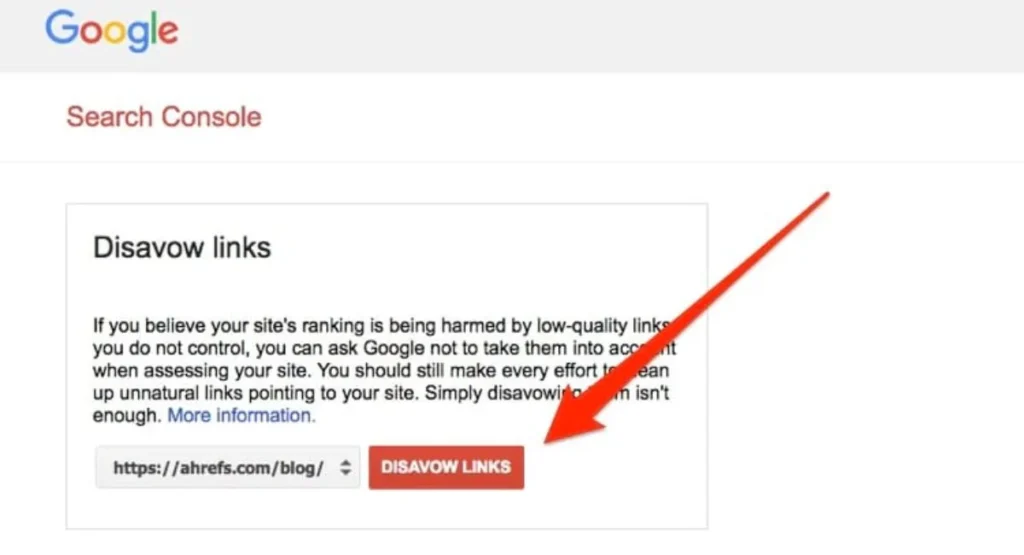
| 7………………………….., | Submit to Google | Go to Google Search Console → Disavow Links → Upload file |
Example Scenario:
You notice 50 links from spammy blogs. Export them, create a disavow file, upload it to Google. After a few weeks, Google ignores these links when ranking your site.
Mini Case Study:
A travel blogger received low-quality backlinks from spam forums. Using Ahrefs and disavowing links saved their website’s ranking for competitive keywords.
Once you complete these steps, you’ll fully understand how to disavow backlinks in Ahrefs correctly.
How to Create a Proper Disavow File (With Example)
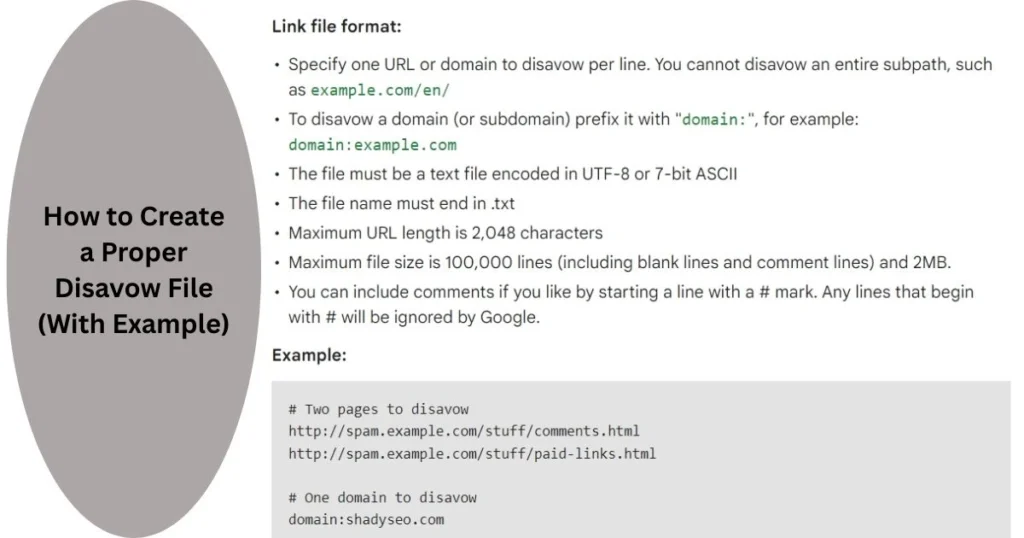
Creating a disavow file is simple, but the format must be correct.
Google only accepts a plain text (.txt) file. Each harmful link should be listed on a new line.
If you want to disavow an entire domain, use this format:
domain:spamwebsite.com
If you want to disavow a specific page only:
https://spamwebsite.com/bad-page.html
Example of a proper disavow file:
domain:badlinks.com
domain:spamsite.net
https://toxicdomain.com/bad-article.html
Important Tips:
- Save the file as .txt (not Word or PDF)
- Use one link or domain per line
- Double-check before uploading
After creating the file, upload it inside Google Search Console’s Disavow Tool.
Ahrefs vs Google Disavow Tool: What’s the Difference?
Many beginners think Ahrefs removes backlinks automatically, but that is not true.
Ahrefs helps you analyze and identify toxic backlinks. It shows you:
- Referring domains
- Domain Rating (DR)
- Anchor text
- Spam indicators
However, Ahrefs cannot directly remove links.
To officially ignore harmful links, you must upload your disavow file in Google Search Console.
In simple words:
Ahrefs = Finds harmful backlinks
Google Disavow Tool = Ignores them during ranking
Using both together ensures your backlink profile stays clean and safe.
Who Should Use Disavow Backlinks?
Disavowing backlinks is useful for:
- Beginners: Protect your new site from mistakes.
- Small business owners: Keep your website’s reputation safe.
- Freelancers/Bloggers: Avoid negative SEO attacks from competitors.
Info Box:
Even established websites should monitor backlinks. One spammy link can hurt your SEO if ignored.
Is Disavow Backlinks Safe?
Yes, if done carefully.
Pros:
- Prevents Google penalties.
- Maintains healthy SEO.
- Protects your site from negative SEO.
Cons:
- Removing good links by mistake can hurt rankings.
- Needs monitoring and occasional updates.
- Google can take weeks to process changes.
💡 Tip:
Only disavow links that are clearly harmful. When in doubt, leave the link alone.
Common Mistakes Beginners Make
- Disavowing all backlinks without checking.
- Ignoring new spammy backlinks.
- Uploading a disavow file in the wrong format.
- Not monitoring backlinks regularly.
- Confusing “URL” vs “Domain” disavows.
Warning Box:
Always double-check each link before disavowing. Accidentally removing good links can harm your SEO.
When Should You NOT Disavow Backlinks?
Disavowing backlinks is powerful, but it should not be done carelessly.
You should NOT disavow links if:
- The link is natural, even if the website has low Domain Rating
- The website is relevant to your niche
- The link brings real traffic
- Google is already ignoring spam automatically
Remember, not every low-quality link is harmful.
Over-disavowing can remove valuable backlinks and hurt your rankings.
When in doubt, leave the link or consult an SEO expert before adding it to your disavow file.
Many beginners search for how to disavow backlinks in Ahrefs after noticing sudden ranking drops.
FAQs About Disavow Backlinks
Q1: How often should I check backlinks?
A: Once a month is ideal.
Q2: Can I disavow all backlinks at once?
A: No, only disavow harmful or spammy links.
Q3: Will disavowing backlinks improve rankings immediately?
A: No. Google can take a few weeks to process your disavow file.
Q4: Is Ahrefs the only tool I can use?
A: No, SEMrush and Google Search Console also work.
Q5: Can disavowing links hurt my site?
A: Only if you remove good links. Always check first.
Q6: What if I miss a bad backlink?
A: Regular monitoring catches new bad links. Update your disavow file as needed.
Extra Tips for Beginners
- Always export your backlink list from Ahrefs before disavowing.
- Use filters to focus only on harmful links.
- Keep your disavow file organized.
- Track changes in Google Search Console to see improvements.
Mini Tip Box:
Start small. Disavow only a few clearly harmful links at first. Gradually handle the rest.
Conclusion
Learning how to disavow backlinks in Ahrefs is essential for keeping your website safe.
Regular monitoring, careful disavowing, and following this step-by-step guide can protect your rankings.
Even beginners can handle backlinks confidently with the right process. Start monitoring today, and don’t let spammy links hurt your site.
Now you know exactly how to disavow backlinks in Ahrefs and keep your SEO safe.