Monthly List of Themes for Preschool: A Complete Year-Long Curriculum Planning Guide
Simple, Organized, and Development-Focused Theme Ideas for the Entire Year
Introduction
A monthly list of themes for preschool helps teachers create a structured and engaging year-long learning plan.
Creating a structured yet flexible preschool plan can feel overwhelming. Many teachers and homeschool parents ask the same question: How do I organize learning in a way that keeps young children engaged all year?
A monthly list of themes for preschool is one of the simplest and most effective solutions.
Theme-based learning helps preschoolers connect ideas, build vocabulary, strengthen early literacy, and develop social-emotional skills in a natural way. Instead of random activities, children explore a focused topic through stories, hands-on projects, art, movement, math, and science.
In this complete guide, you’ll find:
- A full January–December preschool theme breakdown
- Skill-based learning connections
- Real classroom examples
- Tips for aligning with early learning standards
- Practical planning strategies
- Frequently asked questions
Whether you are a preschool teacher or a homeschool parent, this guide will help you create a structured, engaging, and developmentally appropriate year plan.
What Is a Monthly List of Themes for Preschool?
A monthly list of themes for preschool is a year-long plan that organizes learning around specific topics each month.
Instead of teaching isolated skills, educators connect:
- Literacy
- Math foundations
- Fine motor practice
- Science exploration
- Social-emotional learning
- Creative arts
All through one unifying theme.
For example:
Theme: Ocean
- Literacy: Read books about sea animals
- Math: Count shells
- Science: Learn about habitats
- Art: Create paper plate fish
- Sensory play: Water table exploration
This integrated approach supports:
- Cognitive development
- Vocabulary expansion
- Memory retention
- Critical thinking
- Kindergarten readiness
Why Preschool Teachers Use Monthly Theme-Based Planning?
Using a monthly list of themes for preschool helps teachers stay organized, improve engagement, and create a structured learning environment throughout the year.
Using a structured theme calendar offers many benefits.
1. Improves Cognitive Development
When children explore a topic for several weeks, they build deeper understanding. Repetition strengthens neural connections in the brain.
2. Builds Vocabulary Naturally
Theme-based learning introduces related words repeatedly. For example, during a farm theme, children hear:
- Barn
- Tractor
- Harvest
- Farmer
- Livestock
This improves language development significantly.
3. Supports Social-Emotional Growth
Themes like “Friendship,” “Feelings,” and “Family” help children understand emotions and relationships.
4. Reduces Teacher Stress
A monthly list of themes for preschool eliminates last-minute planning. Teachers feel more organized and confident.
5. Encourages Hands-On Learning
Young children learn best through:
- Sensory play
- Movement
- Exploration
- Dramatic play
Themes make it easier to design engaging centers.
How to Create a Balanced Monthly Preschool Theme Plan?
Before jumping into the yearly list, here is how to structure each month effectively.
Step 1: Choose 3–4 Core Weekly Focus Areas
Example: Spring Theme Month
- Week 1: Weather
- Week 2: Plants
- Week 3: Bugs
- Week 4: Rainbows
Step 2: Connect Learning Centers
Each week should include:
- Literacy center
- Math center
- Art center
- Sensory play
- Science discovery
- Dramatic play
Step 3: Align With Developmental Milestones
Focus on:
- Letter recognition
- Number sense (1–20)
- Fine motor strengthening
- Listening skills
- Turn-taking
- Emotional regulation
Step 4: Keep It Flexible
Children’s interests matter. If they love insects, extend the bug theme another week.
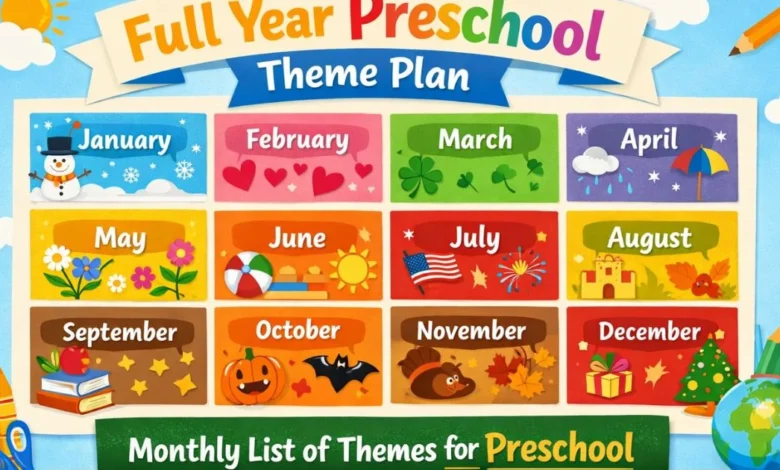
Complete Monthly List of Themes for Preschool
Below is the complete monthly list of themes for preschool, organized in a clear and practical year-long format to make planning simple and effective.
Now let’s break down a full year.
January Preschool Themes: Winter & New Beginnings
January is perfect for winter exploration and goal-setting ideas.
Winter Wonderland
- Snow sensory bins
- Ice melting science experiment
- Snowman counting games
Arctic Animals
- Polar bears
- Penguins
- Seal habitats
New Year Goals
- Simple classroom rules
- Growth mindset stories
- “I can learn” affirmations
Hibernation
- Animals that sleep in winter
- Bear cave dramatic play
Skills Focus:
- Descriptive vocabulary
- Measurement (ice melting)
- Pattern recognition
February Preschool Themes: Friendship & Emotions
February is ideal for emotional development.
Friendship
- Sharing activities
- Partner art projects
- Friendship bracelets
Kindness
- Kindness chart
- Role-playing empathy
Community Helpers
- Doctor pretend play
- Firefighter safety lessons
Valentine’s Theme
- Heart shape recognition
- Card making
- Counting candy hearts
Skills Focus:
- Social-emotional learning
- Shape recognition
- Fine motor cutting
March Preschool Themes: Spring & Nature Exploration
March brings weather changes and growth.
Weather
- Rain gauge experiments
- Cloud art
- Wind movement games
Plants & Seeds
- Planting seeds
- Observing growth
- Root vs. stem discussions
Rainbows
- Color mixing
- Prism experiments
St. Patrick’s Day (Optional)
- Gold coin counting
- Simple patterns
Skills Focus:
- Scientific observation
- Color recognition
- Sequencing
April Preschool Themes: Earth & Environment
April focuses on environmental awareness.
Earth Day
- Recycling crafts
- Sorting materials
Bugs & Insects
- Butterfly life cycle
- Ant counting
Farm Animals
- Animal sounds
- Barnyard dramatic play
Rain & Rainbows
- Water cycle introduction
- Sensory play
Skills Focus:
- Sorting
- Categorizing
- Life cycles
May Preschool Themes: Growth & Transportation
Flowers & Gardens
- Flower dissection
- Pollination basics
Transportation
- Land, air, water vehicles
- Counting wheels
Mother’s Day
- Family appreciation crafts
Healthy Habits
- Hygiene lessons
- Exercise games
Skills Focus:
- Comparison
- Community awareness
- Fine motor strengthening
June Preschool Themes: Summer Learning
Ocean
- Sea animal classification
- Ocean sensory bin
Camping
- Pretend campfire
- Storytelling circle
Dinosaurs
- Fossil excavation
- Size comparison
Summer Safety
- Water safety basics
- Sun protection discussion
Skills Focus:
- Measurement
- Pretend play language
- Inquiry skills
July Preschool Themes: Outdoor & Health
Zoo Animals
- Habitat sorting
- Animal movement games
Water Play
- Sink or float
- Measuring cups
Healthy Eating
- Food groups
- Taste testing
Patriotic Theme
- Flag art
- Community identity
Skills Focus:
- Experimentation
- Gross motor development
- Patterning
August Preschool Themes: Back to School Foundations
All About Me
- Name tracing
- Self-portraits
Classroom Rules
- Listening skills
- Turn-taking
Colors & Shapes
- Shape hunts
- Color mixing
Feelings & Emotions
- Emotion cards
- Calm-down corner setup
Skills Focus:
- Self-awareness
- Early literacy
- Social structure
September Preschool Themes: Fall Learning Units
Apples
- Apple life cycle
- Taste comparison
Community
- Neighborhood map
- Mail center pretend play
Fire Safety
- Stop, drop, and roll practice
Leaves
- Leaf rubbings
- Color changes discussion
Skills Focus:
- Sequencing
- Safety awareness
- Observation skills
October Preschool Themes: Harvest & Exploration
Pumpkins
- Pumpkin measurement
- Seed counting
Spiders
- Web counting
- Fine motor threading
Bats
- Nocturnal animals
- Sound exploration
Halloween Literacy
- Story retelling
- Rhyming words
Skills Focus:
- Counting
- Rhyming
- Categorization
November Preschool Themes: Gratitude & Family
Thanksgiving
- Gratitude circle time
- Cultural awareness
Family Roles
- Family tree art
Harvest
- Corn sensory bins
Kindness Review
- Reflection activities
Skills Focus:
- Emotional vocabulary
- Cultural understanding
- Communication
December Preschool Themes: Winter Celebrations
Holidays Around the World
- Global traditions
- Map introduction
Gingerbread
- Baking measurement
- Sequencing recipe steps
Snow & Ice
- Frozen science experiments
Giving & Sharing
- Donation projects
- Community care
Skills Focus:
- Early geography
- Sequencing
- Compassion
How Monthly Preschool Themes Support Early Childhood Development?
A structured monthly list of themes for preschool supports:
Language Development
Children learn topic-specific vocabulary.
Early Literacy
Books align with themes, increasing comprehension.
Math Foundations
Counting, sorting, patterning, comparing.
Scientific Thinking
Observation, questioning, predicting.
Social-Emotional Growth
Themes like feelings and family build empathy.
Aligning Monthly Themes With Early Learning Standards
Preschool themes can align with:
- Letter recognition goals
- Phonemic awareness
- Number sense (1–20)
- Shape identification
- Fine motor benchmarks
- Kindergarten readiness skills
Themes simply provide context.
Common Mistakes in Preschool Theme Planning
1. Theme Overload
Too many topics confuse children.
2. Ignoring Skill Progression
Themes should build skills gradually.
3. Lack of Structure
Every theme needs literacy, math, art, and play balance.
4. Overcomplicating Activities
Preschoolers need simple, hands-on learning.
Frequently Asked Questions
How many themes should preschoolers learn per month?
Usually 3–4 weekly sub-themes work best.
Should themes follow seasons?
Seasonal themes feel natural and engaging.
Can homeschool parents use this plan?
Yes. It works perfectly for home learning.
Are themes required for preschool?
Not required, but highly effective.
How long should each theme last?
One week per sub-theme is ideal.
Final Thoughts :on Monthly List of Themes for Preschool
A well-planned monthly list of themes for preschool creates structure, creativity, and confidence for both teachers and children.
Overall, a monthly list of themes for preschool supports organized teaching and meaningful early childhood learning.
It supports:
- Organized lesson planning
- Deeper understanding
- Skill progression
- Emotional growth
- Kindergarten readiness
Most importantly, it makes learning joyful.
Start simple. Stay consistent. Adjust based on children’s interests.
With a clear yearly theme plan, your preschool classroom or homeschool environment will feel focused, creative, and purposeful.
Flash Topic