Weekly Preschool Lesson Plan Template: A Complete Guide for Teachers and Parents
A Complete Guide to Organized, Balanced & Stress-Free Preschool Planning
A Weekly Preschool Lesson Plan Template helps teachers and parents organise engaging learning activities for young children in a simple and effective way. Preschool children learn best through play, exploration, creativity, and hands-on experiences, so proper planning is important for creating meaningful lessons.
A well-designed weekly plan gives educators a clear structure for activities, learning goals, materials, and classroom routines. Instead of spending hours deciding what to teach each day, teachers can follow a prepared format and focus more on helping children learn and participate.
Whether you work in a preschool classroom, daycare centre, or teach at home, a weekly lesson plan can improve organisation and make learning more enjoyable. It helps balance important areas such as language development, early maths, creativity, social skills, and physical activities while keeping lessons fun and age-appropriate.
What Is a Weekly Preschool Lesson Plan Template?
A Weekly Preschool Lesson Plan Template is a planning format that helps educators arrange activities and learning objectives for an entire week. It works as a guide that shows what children will learn, which activities they will complete, and what materials are needed.
Unlike a simple daily schedule, a preschool lesson plan focuses on the purpose behind each activity. It connects fun classroom experiences with important developmental skills.
For example, a weekly theme about “Animals” can include:
- Reading animal stories to improve language skills
- Counting animal pictures for early maths practice
- Creating animal crafts for creativity
- Discussing animal habitats for science learning
- Playing movement games to support physical development
A good template allows teachers to organise different activities around one theme while making sure children receive a balanced learning experience.
The goal is not to create a strict timetable. Instead, it provides direction while allowing teachers to adjust activities based on children’s interests and abilities.
Why Is a Preschool Weekly Lesson Plan Important?
Planning plays an important role in early childhood education because young children need structured but flexible learning experiences. A well-organised classroom helps children feel comfortable, confident, and ready to participate.
Without planning, teachers may struggle to manage time, prepare resources, or provide activities that support different areas of development. A weekly plan helps educators think ahead and create lessons with clear learning purposes.
A preschool weekly lesson plan helps teachers:
- Create consistent classroom routines
- Prepare materials before activities begin
- Support different learning styles
- Track children’s progress
- Balance educational activities with play
For example, during a “Weather” theme, a teacher can plan weather songs, cloud artwork, outdoor observations, and simple experiments throughout the week. Children learn the same topic through different activities, which improves understanding and memory.
Good planning also gives teachers more confidence because they know what activities are coming next and how each lesson supports children’s growth.
Benefits of Using a Weekly Preschool Lesson Plan Template
Using a Weekly Preschool Lesson Plan Template provides many practical benefits for educators. One of the biggest advantages is saving time. Teachers do not need to create a completely new plan every week because the template provides an organised structure.
A template also helps maintain balance in teaching. Preschool education includes many areas, and it can be easy to focus too much on one skill. A good plan reminds teachers to include language, maths, creativity, movement, and social development activities.
Other important benefits include:
- Better classroom organisation
- Less preparation stress
- More creative lesson ideas
- Improved learning experiences
- Easier communication with parents
- Better understanding of children’s progress
For new preschool teachers, templates are especially useful because they provide guidance on how to organise activities. Experienced teachers can also use them to save time and create fresh lesson ideas.
A well-planned classroom allows teachers to spend more time interacting with children instead of managing last-minute preparation.
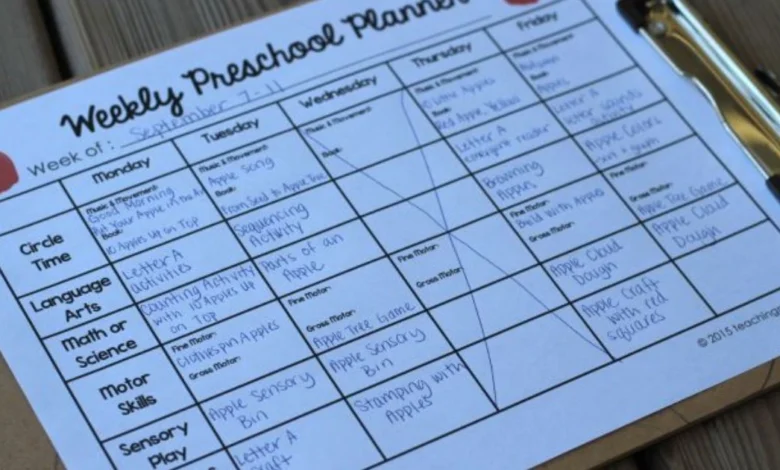
Printable Weekly Preschool Lesson Plan Template
A printable template makes weekly planning easier because teachers can quickly write down themes, activities, and learning goals in one place. It can be adjusted according to classroom needs, curriculum requirements, and children’s age groups.
Here is a simple example:
| Day | Theme | Activity Ideas | Learning Goal |
|---|---|---|---|
| Monday | Introduction Topic | Storytelling and group discussion | Language development |
| Tuesday | Creative Learning | Drawing, painting, or craft activity | Creativity and fine motor skills |
| Wednesday | Exploration | Science experiment or sensory activity | Observation and problem-solving |
| Thursday | Skill Practice | Counting games, puzzles, or sorting activities | Early maths skills |
| Friday | Review Day | Songs, games, and weekly recap | Memory and confidence |
Teachers can add extra sections such as materials needed, homework ideas, observations, or children’s achievements.
The best templates are simple enough to use regularly but detailed enough to support effective teaching.
How to Create an Effective Preschool Weekly Lesson Plan
Creating an effective preschool lesson plan does not mean filling every minute with activities. Young children need a balance between structured learning, free play, movement, and exploration. The best plans provide guidance while allowing teachers to adapt according to children’s interests.
Start by choosing a weekly theme that connects different activities together. Popular preschool themes include seasons, animals, colours, family, transportation, plants, and community helpers. After selecting a theme, decide what skills children should practise during the week.
When creating your plan, consider:
- The age and ability level of children
- Activities that encourage participation
- Materials available in the classroom
- Different learning styles
- Time needed for each activity
For example, if the theme is “Plants,” children can read a plant story, plant seeds, count leaves, draw flowers, and discuss what plants need to grow. One simple theme can support language, science, maths, and creativity at the same time.
An effective preschool plan should be realistic, flexible, and focused on creating enjoyable learning experiences.
Real Classroom Examples and Activity Ideas
A weekly lesson plan becomes more useful when teachers connect activities with real-life experiences. Preschool children learn better when they can explore topics through practical activities instead of only listening.
For a “Five Senses” theme, a teacher can plan different activities throughout the week. Children may identify sounds using instruments, explore textures with sensory materials, taste different fruits, and create artwork based on what they see.
For a “Community Helpers” theme, teachers can introduce different jobs through stories and role-play. Children can pretend to be doctors, firefighters, teachers, or shopkeepers while improving communication and social skills.
A “Seasons” theme can include weather observations, nature walks, seasonal crafts, and discussions about changes in the environment.
These examples show that a good weekly plan does not need expensive resources. Simple classroom materials and creative ideas can create valuable learning opportunities.
Pros and Cons of Using Preschool Lesson Plan Templates
A preschool lesson plan template can make teaching easier, but it also has some limitations. Understanding both advantages and disadvantages helps educators use templates in the right way.
Pros:
- Saves planning time
- Helps teachers stay organised
- Creates a balanced learning schedule
- Makes classroom preparation easier
- Supports consistent teaching routines
- Helps new teachers understand lesson structure
Cons:
- Some templates may not match every classroom style
- Teachers may become too dependent on fixed plans
- Activities may need changes for different learning abilities
- A template cannot replace teacher creativity
The biggest benefit of a template is providing structure. However, teachers should always adjust activities according to children’s needs. Preschool classrooms are naturally flexible, and unexpected learning moments can often become the most valuable experiences.
A good teacher uses a template as a helpful guide rather than a strict rule.
Why Do People Choose Weekly Preschool Lesson Plan Templates?
Teachers and parents choose weekly lesson plan templates because they make early learning easier to organise. Preschool education requires preparation, creativity, and patience, and a structured plan helps manage these responsibilities.
For busy teachers, a template reduces the time spent deciding what activities to prepare each day. It allows them to focus more on teaching and interacting with children.
New educators often use templates because they provide ideas for arranging lessons and understanding how different activities support child development. Experienced teachers use them to maintain organisation and introduce new activity ideas.
Parents who homeschool also find lesson plan templates useful because they provide a simple learning routine at home. They can adapt activities according to their child’s interests and learning pace.
The popularity of these templates comes from their simplicity. They provide a clear starting point while still allowing creativity and personal teaching styles.
Is a Weekly Preschool Lesson Plan Template Worth It?
A Weekly Preschool Lesson Plan Template is worth using for teachers, daycare providers, and homeschooling parents who want a more organised approach to early education. It saves preparation time and helps ensure children experience a variety of learning activities.
The main value of a template is not just organisation. It helps educators create purposeful lessons where every activity has a learning goal. Instead of choosing random games or tasks, teachers can design experiences that support children’s development.
However, the best results come when templates are personalised. A classroom of three-year-olds may need different activities compared with a classroom of five-year-olds. Teachers should modify plans according to children’s abilities, interests, and progress.
Overall, a lesson plan template is a practical tool that improves teaching efficiency while creating a better learning environment for children.
FAQ’S
What should be included in a weekly preschool lesson plan?
A weekly preschool lesson plan should include a theme, learning objectives, daily activities, materials, classroom routines, and simple ways to observe children’s progress.
How do I make a preschool lesson plan for beginners?
Start with a simple theme, choose age-appropriate activities, prepare materials in advance, and include a mix of learning, creativity, movement, and play.
Can I use a preschool lesson plan template for homeschooling?
Yes, parents can use lesson plan templates for homeschooling. They provide structure and help organise educational activities while allowing flexibility.
How many activities should preschool children do each day?
The number of activities depends on children’s age and attention span. Preschool plans should include a few meaningful activities rather than too many rushed tasks.
Are printable preschool lesson plan templates useful?
Yes, printable templates are useful because teachers can quickly organise weekly activities, write notes, and prepare classroom resources in advance.
Conclusion
A Weekly Preschool Lesson Plan Template is a valuable tool that helps teachers create organised, engaging, and meaningful learning experiences for young children. It provides a clear structure for planning activities while allowing educators to remain flexible and creative.
A successful preschool lesson plan should focus on more than completing tasks. It should encourage curiosity, exploration, communication, and confidence through enjoyable activities. By combining themes, hands-on experiences, and developmental goals, teachers can create a positive classroom environment.
Whether you are a preschool teacher, daycare educator, or homeschooling parent, using a weekly planning template can save time and improve lesson quality. When adapted to children’s needs, it becomes a powerful resource for supporting early childhood learning and development.