10 Tips on How to Study the Bible for Better Understanding and Spiritual Growth
Learning tips on how to study the Bible can completely change the way you read Scripture and apply it in daily life. Many people open the Bible with good intentions but quickly feel confused, distracted, or unsure where to begin. That is why understanding the right tips on how to study the Bible is so important for both beginners and long-time believers.
A strong Bible study habit is not about reading fast or finishing many chapters in one day. It is about reading with purpose, understanding the meaning, and allowing God’s Word to shape your thoughts, choices, and spiritual growth.
Why Knowing Tips on How to Study the Bible Matters
Before jumping into a routine, it helps to understand why learning tips on how to study the Bible is valuable. The Bible is full of wisdom, history, promises, commands, and life-changing truth, but it can feel overwhelming without a clear plan. Many people read random verses and miss the deeper message because they do not use practical tips on how to study the Bible in a consistent way. When you study Scripture with care, you begin to understand context, recognize important themes, and see how one passage connects with another. This leads to stronger faith, better decision-making, and a deeper relationship with God.
1. Start With Prayer Before You Read
One of the best tips on how to study the Bible is to begin every study session with prayer. Ask God to give you wisdom, focus, understanding, and a heart that is ready to learn. Prayer helps you approach the Bible with humility instead of treating it like an ordinary book. It also helps remove distractions and makes your study time feel more personal and meaningful. Even a short prayer can prepare your mind and spirit for a more effective Bible study session.
2. Choose a Bible Translation You Can Understand
Another important part of tips on how to study the Bible is selecting a translation that feels clear and easy to follow. If the wording is too difficult, you may lose focus or misunderstand the message. A readable translation can help you stay consistent and enjoy the process more. You can also compare one or two translations when a verse feels confusing. This simple habit makes Bible study easier and helps you understand the true meaning more clearly.
3. Start With Beginner-Friendly Books
If you are new to Bible study, one of the smartest tips on how to study the Bible is to begin with books that are easier to understand. The Gospel of John, the book of James, Psalms, and Proverbs are great places to start because they are practical, powerful, and easier to follow. Starting in difficult prophetic books too early can make Bible study feel complicated and discouraging. A good starting point builds confidence and helps you stay motivated. When your first experience is clear and encouraging, you are more likely to keep going.
4. Use a Simple Bible Study Method
A strong routine becomes easier when you use a clear method, and this is one of the most useful tips on how to study the Bible. A simple approach is to observe what the passage says, understand what it means, and apply it to your life. First, notice important words, repeated ideas, commands, and key people in the passage. Next, think about the message and what the author wanted the original audience to understand. Finally, ask how this truth should influence your attitude, decisions, or daily actions.
5. Read the Full Context, Not Just One Verse
Among the most powerful tips on how to study the Bible is learning to read verses in context. Many people make mistakes because they focus on one verse without reading the verses before and after it. Context helps you understand who is speaking, why they are speaking, and what the full message really means. This protects you from misunderstanding promises, warnings, or commands. If you want to study the Bible correctly, context should always be part of your routine.
6. Keep a Bible Study Journal
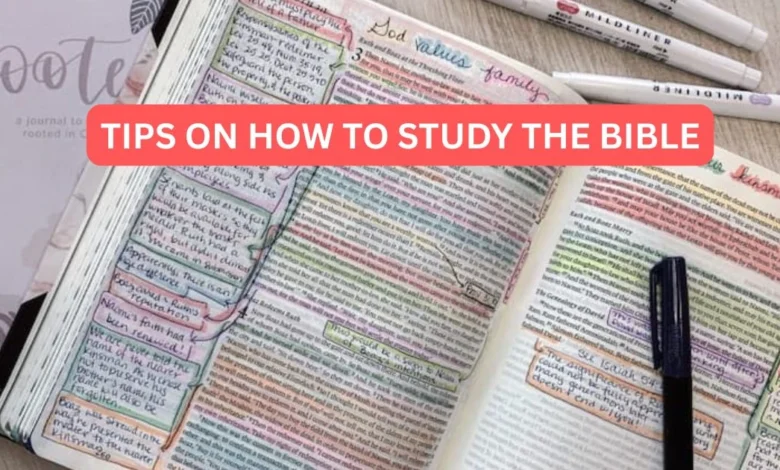
One of the practical tips on how to study the Bible that many people ignore is journaling. Writing down notes helps you remember what you read and gives you a place to record important verses, questions, and personal reflections. A journal can also help you track spiritual growth over time and see how God has been teaching you. You do not need anything fancy—just a notebook is enough. This small habit can make your study time much deeper and more organized.
7. Ask Questions While You Study
Good Bible study becomes much stronger when you ask thoughtful questions, which is why this is one of the best tips on how to study the Bible. Ask questions like: Who is speaking? Who is the audience? What is the main message? What does this passage teach about God? What should I do differently because of this truth? These questions help you slow down and pay attention instead of reading passively. The more intentional your questions are, the more meaningful your Bible study will become.
8. Let the Bible Explain the Bible
One of the most effective tips on how to study the Bible is using cross-references and related verses. The Bible often explains itself when you compare passages on the same topic. If a verse feels difficult, look at other Scriptures that mention the same theme, promise, or teaching. This helps you understand the bigger picture and prevents you from building ideas on one isolated verse. Over time, this habit helps you see the unity and depth of God’s Word more clearly.
9. Apply What You Learn to Daily Life
Bible study is not only about gaining knowledge, and this is one of the most important tips on how to study the Bible to remember. After reading a passage, ask yourself what needs to change in your life because of what you learned. Maybe you need to trust more, forgive someone, pray with more faith, or change a habit. Real growth happens when Scripture moves from the page into your actions and decisions. The goal is not just information but transformation.
10. Stay Consistent and Be Patient
The final and most important of all tips on how to study the Bible is to stay consistent. You do not need to study for hours every day to grow in understanding. Even 15 to 20 minutes of focused study can make a big difference when done regularly. Some passages will be easy to understand, while others may take time, prayer, and repeated reading. Be patient with the process, because spiritual growth happens little by little through faithful study.
Quick Table: Best Bible Study Habits
| Tip | Why It Helps |
|---|---|
| Pray first | Prepares your heart and mind |
| Use a clear translation | Makes reading easier to understand |
| Start with simple books | Builds confidence |
| Follow a study method | Gives structure and focus |
| Read in context | Prevents misunderstanding |
| Keep a journal | Helps memory and reflection |
| Ask questions | Deepens understanding |
| Compare Scriptures | Clarifies meaning |
| Apply the lesson | Leads to life change |
| Stay consistent | Builds long-term growth |
Conclusion
Learning these tips on how to study the Bible can help you move from casual reading to meaningful understanding and spiritual growth. When you pray, choose the right books, read in context, ask good questions, and apply what you learn, Bible study becomes much more powerful and rewarding. The best part is that you do not need to be an expert to begin. You simply need a willing heart, a clear method, and a commitment to keep showing up. As you stay consistent, your confidence, wisdom, and connection with God’s Word will continue to grow.
FAQs
What is the best way to start Bible study?
Start with prayer, choose an easy book like John or James, and read with a simple plan.
How long should I study the Bible daily?
Even 15–20 minutes a day can be enough if you stay focused and consistent.
Which Bible book is best for beginners?
John, James, Psalms, and Proverbs are excellent starting points.
Why is context important in Bible study?
Context helps you understand the real meaning of a verse and prevents mistakes.
Can I study the Bible without special tools?
Yes, a Bible, a notebook, and consistency are enough to begin effectively.