Who Would Win Books: Complete Guide for Young Readers
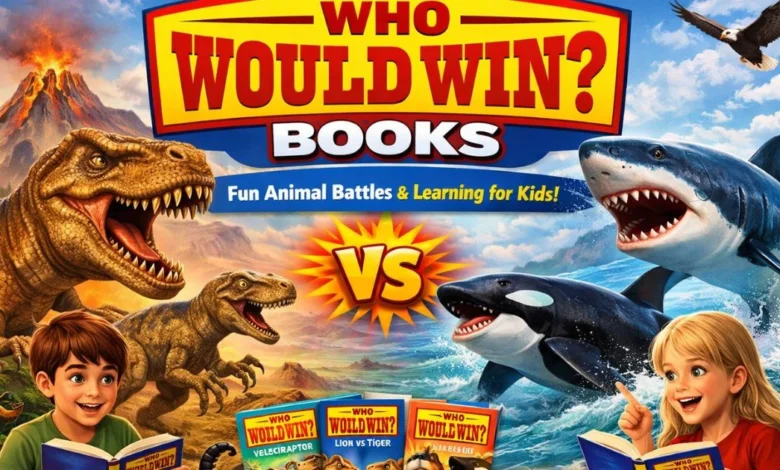
Who Would Win Books are a popular children’s nonfiction series that makes learning about animals exciting through imaginative head-to-head comparisons. Instead of simply listing facts about wildlife, each book places two animals in a fictional contest and asks readers to consider which one would have the advantage. The comparisons explore features such as size, speed, strength, teeth, claws, defence, hunting abilities and natural behaviour.
The series is written to make factual reading more entertaining and easier for young readers to follow. Children can make their own prediction before discovering the final result, which creates curiosity throughout the book. The concept also encourages readers to compare evidence rather than choose an animal simply because it is their favourite. For parents and teachers, this makes the series useful for developing reading interest while introducing children to wildlife, animal adaptations, habitats and basic scientific thinking.
What Are Who Would Win Books?
Who Would Win Books are illustrated children’s nonfiction books created by author Jerry Pallotta and illustrator Rob Bolster. Each title focuses on two animals and explores their physical characteristics, natural abilities and survival features before presenting an imaginary contest between them. The animals can come from different habitats, which makes each comparison distinctive and gives readers an opportunity to discover unfamiliar wildlife.
The battles described in the books are fictional rather than reports of actual animal fights. Their purpose is to create an entertaining structure for presenting factual information. Readers learn why an animal may have an advantage because of its body size, powerful jaws, speed, defensive features or hunting skills. This approach gives individual facts a clear purpose and helps children understand how different physical characteristics can help animals survive in their natural environments.
What Can Children Learn From Who Would Win Books?
One of the strongest educational features of the series is the way it introduces scientific ideas through comparison. Children can learn about animal anatomy, habitats, diets, physical adaptations, movement and defence mechanisms while following an entertaining question. Instead of encountering facts without context, readers can understand why a particular characteristic might matter to an animal.
The books can also develop early critical-thinking skills. A child may initially assume that the largest animal must win, but information about speed, agility, protection or attacking abilities can change that prediction. This encourages children to consider several pieces of evidence before reaching a conclusion. The experience can support vocabulary development, reading comprehension and the ability to explain an opinion using information from a text.
What Are the Main Benefits of Who Would Win Books?
The biggest benefit is that the series can make nonfiction reading feel entertaining. Children who are less interested in traditional fact books may become more willing to read when the subject is presented as an exciting comparison. The question of which animal would win gives children an immediate reason to continue reading and discover more information.
The books can also encourage curiosity beyond the pages. After reading about two animals, a child may become interested in where they live, what they eat, how they hunt or how they protect themselves. This makes the books useful as a starting point for wider learning about wildlife and nature. Parents can use the comparisons to begin conversations about ecosystems, food chains and animal adaptations without making the activity feel like a formal lesson.
How Can Parents Use Who Would Win Books at Home?
Parents can make the reading experience more interactive by asking children to make a prediction before the comparison begins. Instead of asking only which animal they prefer, parents can ask what evidence makes one animal seem stronger, faster or better protected. This encourages children to think about the information they already know and explain their reasoning.
During reading, parents can discuss new facts that might change the child’s opinion. After finishing the book, they can ask the child to describe the most important advantage of each animal. A child could also draw the animals, compare their habitats or research another fact about one species. These simple activities turn a short reading session into an opportunity to practise comprehension, speaking and scientific curiosity.
How Can Teachers Use the Series in Classrooms?
Teachers can use Who Would Win Books as an accessible introduction to several science topics. Animal comparisons can lead naturally into lessons about habitats, adaptations, diets, predators, prey and physical characteristics. A teacher can ask pupils to identify the features that help each animal survive and explain why those features are useful in its environment.
The books can also support English language activities. Pupils can predict an outcome, summarise information, describe an animal and explain their conclusions using evidence from the text. A class could compare two species in writing after reading a title and discuss whether the final outcome is convincing. This combination of science and literacy makes the books useful for classroom discussion while keeping the subject interesting for young learners.
Why Do Children Enjoy Who Would Win Books?
The central question is one of the main reasons children find the series appealing. Asking which animal would win creates immediate curiosity, particularly when the animals have impressive abilities or very different physical characteristics. Children naturally enjoy making predictions, and the books give them a reason to test their predictions against the information they read.
The competitive format also creates a sense of anticipation without requiring a complicated storyline. A child can follow the comparison easily while discovering facts about each animal. The illustrations add visual interest and help younger readers understand the animals being discussed. Because the series contains many different animal match-ups, children who enjoy one book can continue exploring other species and comparisons.
Are Who Would Win Books Scientifically Accurate?
The series uses factual information about animals, but the imaginary battles should not be treated as precise scientific predictions. Real wildlife behaviour is much more complicated than a controlled contest between two animals. Animals do not normally meet under the exact conditions created by a fictional comparison, and factors such as age, health, territory, weather and individual behaviour can affect what happens in nature.
The educational value comes from understanding the characteristics being compared rather than treating the final winner as a guaranteed real-world outcome. Parents and teachers can explain this difference to children, particularly when discussing predators and animal behaviour. The books can then be enjoyed as a combination of factual nonfiction and imaginative storytelling, while more detailed scientific questions can be explored through additional educational resources.
Who Are Who Would Win Books Best For?
The series is particularly suitable for children who are interested in animals, wildlife, dinosaurs, science and nature. It can also be helpful for young readers who enjoy books with a clear challenge or question. The comparison format gives children a simple reason to keep reading, while the illustrations and manageable sections can make nonfiction less intimidating.
They can be useful for independent reading as well as shared reading with parents or teachers. A confident reader may enjoy discovering the facts alone, while a younger child can benefit from discussing the information with an adult. The most suitable title depends on the child’s reading level and interests, but children who already enjoy animal facts are likely to find the concept especially engaging.
What Makes the Series Different From Traditional Animal Books?
Traditional animal nonfiction often presents information species by species, covering topics such as appearance, habitat, diet and behaviour. Who Would Win Books use a different structure by putting two animals into direct comparison. This gives readers a specific question to consider and makes individual facts part of a larger argument about which animal has certain advantages.
The comparison format can make information easier to remember because children connect facts with a particular outcome. For example, learning about powerful jaws becomes more meaningful when readers understand why jaw strength could matter in a hypothetical contest. The approach does not replace detailed wildlife reference books, but it can provide an entertaining introduction that encourages children to explore more advanced information later.
What Are the Limitations of Who Would Win Books?
The fictional battle format is entertaining, but it can sometimes encourage children to focus heavily on the winner rather than the scientific information. A child may remember which animal won without remembering the details about its habitat, behaviour or adaptation. Adults can reduce this problem by discussing the evidence behind the comparison rather than treating the result as the only important part.
Another limitation is that animal behaviour cannot always be reduced to a simple winner-and-loser scenario. Wildlife interactions depend on circumstances, and many animals avoid unnecessary conflict in the first place. Children should therefore understand that the books are designed to make factual learning engaging. For deeper scientific study, they should be combined with reliable resources that explain species and ecosystems in greater detail.
Why Do Parents Choose Who Would Win Books?
Parents often choose the series because it combines entertainment with factual learning. Children are more likely to engage with information when it is connected to a question they genuinely want answered. The fictional competition gives parents an easy way to introduce topics such as animal adaptations without making the reading experience feel like homework.
Another advantage is the potential to encourage independent curiosity. A child who becomes interested in a particular animal may begin asking questions about its environment, diet or behaviour. This can lead naturally to additional reading and research. For families looking for accessible nonfiction, the series provides a straightforward way to introduce wildlife topics while allowing children to enjoy the excitement of making predictions and comparing animals.
Is Who Would Win Books Worth Reading?
For children who enjoy animals and fact-based reading, Who Would Win Books are worth reading. Their greatest strength is their ability to turn ordinary wildlife facts into an engaging comparison. The books can encourage children to read more closely because they want to discover whether their prediction matches the final result.
Their value becomes even greater when adults use them as a starting point for wider learning. After reading a comparison, children can investigate the real habitats of the animals, learn about their diets or explore how their physical adaptations help them survive. The books should not be treated as complete scientific reference material, but they work very well as an accessible introduction to wildlife and nonfiction reading.
Are Who Would Win Books Good for Reluctant Readers?
They can be particularly useful for children who find conventional nonfiction less interesting. The question-driven format creates a clear reason to continue reading, while the animal match-up provides a sense of competition and anticipation. This can help transform reading from a passive activity into something the child actively wants to complete.
Reluctant readers may also benefit from the visual presentation and straightforward organisation of the books. Instead of facing a long block of factual information, they encounter an animal comparison with a clear purpose. Success will still depend on the child’s reading level and interests, but children who already enjoy animals, dinosaurs or competition may find this format easier to approach than a traditional reference book.
(FAQ’s)
Who created Who Would Win Books?
The series was created by author Jerry Pallotta, with illustrations by Rob Bolster. The books are known for combining factual animal information with an imaginative comparison between two species. Their format has helped make animal nonfiction more entertaining and approachable for young readers.
What age group are Who Would Win Books for?
The books are mainly aimed at young readers, particularly children in the primary-school years. Exact suitability depends on reading ability, vocabulary and individual interests. Younger children may enjoy sharing the books with an adult, while stronger readers can explore many titles independently.
Are the battles in Who Would Win Books real?
No. The battles are fictional scenarios created to compare the natural abilities of two animals. The books use factual information about characteristics such as size, strength, speed and defence, but the final contest should not be interpreted as a guaranteed prediction of real wildlife behaviour.
Are Who Would Win Books educational?
Yes. They introduce children to animal characteristics, habitats, adaptations, diets and survival abilities. They can also encourage prediction, comparison, vocabulary development and evidence-based thinking. Their greatest educational benefit comes when readers use the books as a starting point for further questions about wildlife and science.
How can parents make these books more educational?
Parents can ask children to predict the winner before reading and explain their reasoning. After the comparison, they can discuss which facts were most important and whether the child’s opinion changed. Exploring the animals’ real habitats, diets and behaviour afterwards can turn an entertaining book into a broader learning activity.
Conclusion
Who Would Win Books provide an engaging way for children to discover animal facts while enjoying the excitement of an imaginary competition. Their biggest strength is the way they connect information with curiosity. Children are encouraged to compare size, speed, strength, defence and other characteristics instead of simply memorising isolated facts. This can make nonfiction reading more accessible, particularly for young readers who prefer exciting subjects.
The books are not designed to replace detailed wildlife reference material, and their fictional battles should not be confused with real animal behaviour. However, that does not reduce their value as an introduction to science and nature. With support from parents or teachers, the books can lead to conversations about habitats, adaptations, predators and survival. Overall, they are a worthwhile choice for young readers who enjoy animals and want their learning experience to be informative, visual and entertaining.