Are Books Italicized? A Complete Guide to Book Title Formatting
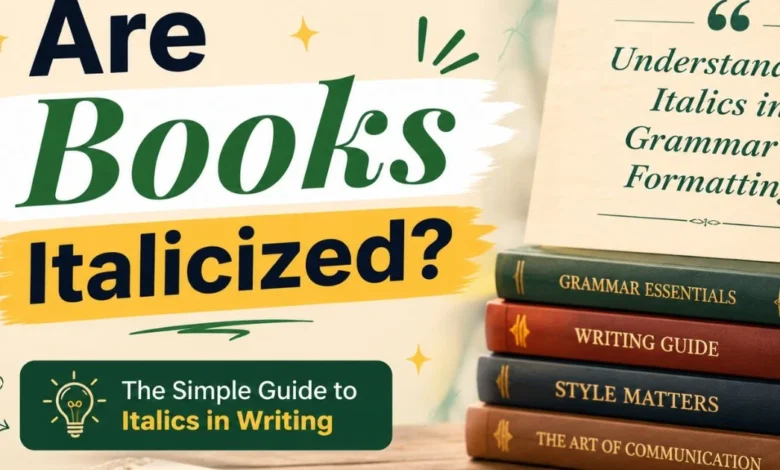
When writing essays, blog posts, academic papers, or online content, many people wonder: are books italicized? This question is one of the most common grammar and formatting concerns among students, writers, bloggers, and professionals. Understanding how to format book titles correctly helps improve readability, professionalism, and credibility. Whether you are following academic style guides or simply creating content for the web, knowing the correct treatment of book titles is essential.
In most modern writing styles, book titles are italicized because books are considered long-form, standalone works. However, there are specific exceptions and formatting rules that every writer should understand. This guide explains everything you need to know about book title formatting, including examples, style guide recommendations, common mistakes, and practical tips.
Why Are Book Titles Italicized?
The main reason book titles are italicized is to distinguish them from the surrounding text. Italics visually signal to readers that a title refers to a complete published work rather than ordinary text. This convention has been widely adopted across publishing, education, journalism, and digital content.
When people ask are books italicized, they are often looking for a simple answer. The answer is generally yes. Books, novels, textbooks, anthologies, and other full-length publications are typically written in italics. This formatting helps readers instantly recognize the title and improves the overall structure of the content.
For example:
- To Kill a Mockingbird
- The Great Gatsby
- Pride and Prejudice
- Harry Potter and the Sorcerer’s Stone
Using italics consistently makes writing appear polished and professional.
Which Writing Styles Italicize Books?
Different style guides may have unique rules, but they generally agree on book title formatting.
MLA Style
MLA (Modern Language Association) recommends italicizing the titles of books, novels, and other long works. This rule applies in essays, research papers, and literary analyses.
Example:
The Catcher in the Rye is a widely studied American novel.
APA Style
APA (American Psychological Association) also uses italics for book titles in both reference lists and general writing.
Example:
Researchers often reference Thinking, Fast and Slow in psychology studies.
Chicago Style
Chicago Manual of Style follows the same convention and italicizes book titles throughout professional and academic publications.
Because all major style guides agree on this rule, the question are books italicized has a straightforward answer in most writing situations.
Book Titles vs. Short Works
One common source of confusion is the difference between books and shorter works. While books are italicized, shorter pieces are generally placed inside quotation marks.
Use Italics For
- Books
- Novels
- Textbooks
- Encyclopedias
- Magazines
- Newspapers
Use Quotation Marks For
- Poems
- Articles
- Short stories
- Songs
- Essays
This distinction helps readers identify whether a title refers to a complete publication or a smaller work contained within a larger publication.
Quick Comparison Table
| Type of Work | Formatting |
| Book | Italics |
| Novel | Italics |
| Textbook | Italics |
| Magazine | Italics |
| Newspaper | Italics |
| Article | Quotation Marks |
| Short Story | Quotation Marks |
| Poem | Quotation Marks |
| Song | Quotation Marks |
Common Examples of Correct Formatting
Understanding real-world examples makes formatting much easier. If you still wonder are books italicized, the examples below demonstrate the correct usage.
| Correct Usage | Explanation |
| I recently read 1984. | Book title italicized |
| The Hobbit remains popular today. | Novel title italicized |
| She studied The Odyssey in class. | Long literary work italicized |
| I enjoyed reading “The Lottery.” | Short story in quotation marks |
| He analyzed “Ozymandias.” | Poem in quotation marks |
Following these examples helps maintain consistency in professional writing.
Are Books Italicized in Online Content?
Many bloggers and website owners ask whether italics should be used online. The answer is yes. Modern websites, blogs, and digital publications generally follow the same formatting standards used in traditional publishing.
Search engines do not directly rank content based on italics, but proper formatting improves user experience. Readers can quickly identify titles, making content easier to scan and understand.
For SEO purposes, using italics appropriately can enhance readability and reduce confusion. Therefore, if your audience asks are books italicized, providing properly formatted examples increases trust and authority.
Benefits of Proper Formatting Online
- Improves readability
- Enhances professionalism
- Increases content clarity
- Supports user experience
- Creates consistent formatting standards
These benefits contribute to a better overall reading experience.
Exceptions to the Rule
Although the answer to are books italicized is usually yes, there are some exceptions.
Plain Text Environments
Certain platforms may not support italics. In these cases, writers may use alternative methods such as capitalization or quotation marks when necessary.
Example:
THE GREAT GATSBY
or
“The Great Gatsby”
Handwritten Assignments
In handwritten work, underlining is traditionally used instead of italics because handwriting cannot easily reproduce italic formatting.
Example:
The Great Gatsby
This convention existed before modern word processors became common.
Technical Restrictions
Some forms, databases, or software systems may remove formatting. In those situations, maintaining consistency becomes more important than applying italics.
Most Common Mistakes Writers Make
Many formatting errors occur because writers confuse books with shorter works. Understanding these mistakes can help improve accuracy.
Mistake 1: Using Quotation Marks for Books
Incorrect:
“To Kill a Mockingbird”
Correct:
Mistake 2: Forgetting Consistency
Some writers italicize one title but not another in the same article. Consistency is crucial for professional writing.
Mistake 3: Confusing Chapters with Books
Book titles are italicized, while chapter titles usually appear in quotation marks.
Example:
Book: Atomic Habits
Chapter: “The Surprising Power of Tiny Changes”
Avoiding these mistakes ensures your writing follows accepted standards.
Best Practices for Writers and Bloggers
If you regularly publish content, following a few best practices can make formatting easier.
Always Follow a Style Guide
Choose MLA, APA, Chicago, or your organization’s preferred style guide and remain consistent.
Check Published Sources
Review respected publishers and educational institutions to confirm formatting conventions.
Use Formatting Tools Carefully
Word processors and content management systems often include italic formatting options. Verify that the formatting displays correctly after publishing.
Maintain Reader-Friendly Formatting
Good formatting improves readability and professionalism. This is especially important for educational blogs and informational websites.
By following these practices, you can confidently answer the question are books italicized whenever it appears in your content strategy.
Quick Reference Table
| Content Type | Formatting Method |
| Book | Italics |
| Novel | Italics |
| Textbook | Italics |
| Magazine | Italics |
| Newspaper | Italics |
| Article | Quotation Marks |
| Essay | Quotation Marks |
| Poem | Quotation Marks |
| Song | Quotation Marks |
| Chapter Title | Quotation Marks |
(FAQs)
Are books italicized in MLA format?
Yes, MLA style requires book titles to be italicized.
Are books italicized in APA style?
Yes, APA style uses italics for book titles.
Are novels italicized?
Yes, novels are considered full-length works and are italicized.
Are short stories italicized?
No, short stories are usually placed in quotation marks.
Are textbooks italicized?
Yes, textbook titles are italicized.
Conclusion
The answer to are books italicized is simple: in most professional, academic, and online writing situations, book titles should be italicized. Major style guides including MLA, APA, and Chicago all support this convention. Italicizing book titles helps readers distinguish complete works from shorter pieces, improves readability, and creates a polished appearance.
Whether you are writing essays, blog posts, research papers, or website content, understanding title formatting is an essential writing skill. By applying the rules explained in this guide, you can format book titles correctly and maintain professional standards across all types of content.