Simple STEM Activities for Kindergarten: Complete Guide for Teachers & Parents
Hands-On Learning Ideas to Develop Creativity, Problem-Solving & Early Math Skills
Early childhood education plays a crucial role in developing curiosity, creativity, and problem-solving skills. Simple STEM Activities for Kindergarten help young learners explore science, technology, engineering, and mathematics in a playful and age-appropriate way. At this stage, children learn best through hands-on experiences rather than lectures or worksheets.
STEM learning in kindergarten should focus on exploration, experimentation, and discovery. When activities are designed thoughtfully, they build foundational thinking skills that support long-term academic success.
This guide provides practical ideas, structured examples, and classroom-ready strategies to implement Simple STEM Activities for Kindergarten effectively in both school and home environments.
What Are STEM Activities in Kindergarten?
STEM stands for Science, Technology, Engineering, and Mathematics. In kindergarten, these subjects are introduced through interactive play rather than formal instruction. Simple STEM Activities for Kindergarten are designed to encourage observation, questioning, building, testing, and problem-solving.
At this level, STEM does not require advanced tools or complex materials. Instead, everyday objects, classroom supplies, and natural materials can be used to create meaningful learning experiences. The goal is to develop critical thinking skills while maintaining engagement and fun.
STEM activities at this age promote curiosity and encourage children to ask “why” and “how” questions. These foundational habits support scientific reasoning and mathematical thinking in later grades.
Why STEM Learning Is Important in Early Childhood?
Early exposure to STEM concepts strengthens cognitive development and analytical thinking. When children participate in Simple STEM Activities for Kindergarten, they learn how to experiment, make predictions, and test outcomes. This process builds resilience and encourages problem-solving.
STEM learning also improves collaboration skills when activities are completed in small groups. Children learn to communicate ideas, share materials, and work toward common goals. These experiences support both academic growth and social development.
Research in early education shows that hands-on exploration increases retention and understanding. Therefore, introducing STEM concepts early builds confidence and curiosity in young learners.
Science Activities for Kindergarten
Science activities focus on observation, exploration, and experimentation. They help children understand the natural world through guided discovery.
Nature Observation
One of the simplest Simple STEM Activities for Kindergarten is exploring nature. Children can observe plants, insects, weather changes, and seasonal patterns. Teachers can encourage students to draw what they see and describe their observations.
This activity builds vocabulary, attention to detail, and scientific thinking. It also encourages curiosity about the environment.
Simple Experiments
Basic experiments such as mixing colors, testing floating and sinking objects, or exploring magnets introduce foundational scientific principles. These experiments do not require complex equipment. Instead, everyday classroom items can be used safely.
Through experimentation, children learn cause-and-effect relationships. This strengthens logical reasoning skills in a developmentally appropriate way.
Technology Exploration in Kindergarten
Technology in early childhood does not mean advanced devices. It refers to understanding how tools work and solving problems using simple systems.
Tool-Based Learning
Activities such as using magnifying glasses, simple digital timers, or educational apps (with supervision) introduce technological thinking. These experiences help children understand how tools assist in learning and exploration.
Interactive Learning Stations
Creating learning stations with picture cards, audio stories, or visual aids can enhance engagement. When included as part of Simple STEM Activities for Kindergarten, technology should always support exploration rather than replace hands-on learning.
Engineering Activities for Young Learners
Engineering in kindergarten focuses on building and designing. It encourages creativity and spatial reasoning.
Building Challenges
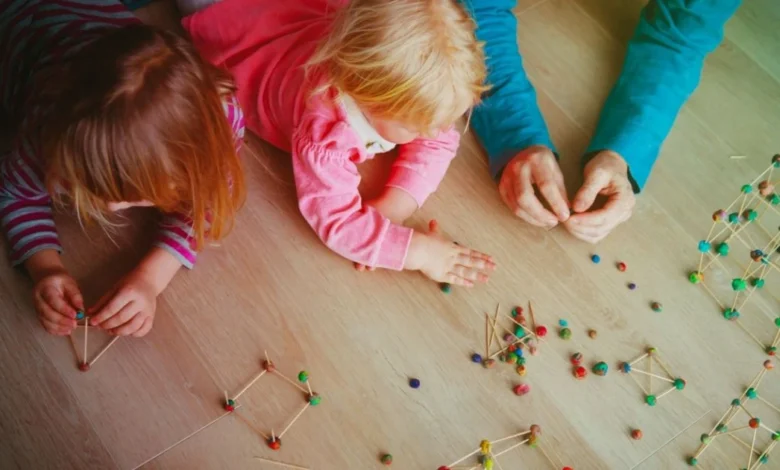
Using blocks, LEGO bricks, or recycled materials, children can design towers, bridges, or small structures. These Simple STEM Activities for Kindergarten teach balance, stability, and planning.
Teachers can introduce challenges such as building the tallest structure or creating something that can hold weight. These tasks promote problem-solving and teamwork.
Design and Improve Tasks
Children can be asked to improve a structure after it falls. This teaches resilience and iterative thinking — a key engineering principle.
Math Activities for Kindergarten
Mathematics in kindergarten focuses on number sense, patterns, and measurement.
Counting and Number Recognition
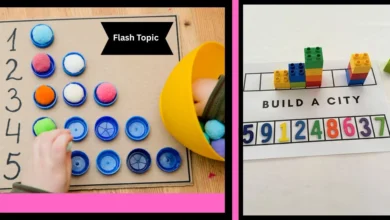
Simple counting games are essential Simple STEM Activities for Kindergarten. Children can count classroom objects, steps, or visual items. This builds one-to-one correspondence and numerical awareness.
Patterns and Sorting
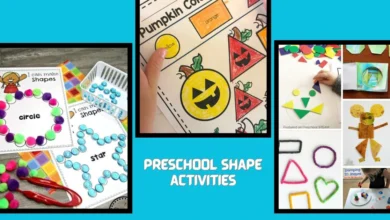
Pattern recognition activities strengthen logical thinking. Sorting objects by color, size, or shape helps children understand classification. These foundational skills prepare them for future algebraic thinking.
How to Implement STEM in the Classroom?
To successfully integrate Simple STEM Activities for Kindergarten, educators should focus on structured yet flexible lesson plans. Activities should allow exploration while maintaining clear learning objectives.
It is important to ask open-ended questions such as:
- What do you think will happen?
- Why do you think this occurred?
- How can we improve this design?
These questions promote critical thinking and deeper engagement.
Benefits of Simple STEM Activities for Kindergarten
Incorporating STEM learning at an early age provides multiple benefits:
- Strengthens problem-solving skills
- Encourages curiosity and exploration
- Builds collaboration abilities
- Improves mathematical reasoning
- Enhances language development
- Supports creativity and innovation
When implemented consistently, Simple STEM Activities for Kindergarten contribute to well-rounded development and long-term academic readiness.
FAQ’S
What are STEM activities for kindergarten?
STEM activities for kindergarten are hands-on learning tasks that teach science, technology, engineering, and math through play, exploration, and simple experiments.
What are some good STEM activities?
Good STEM activities include building blocks, simple science experiments, counting games, pattern sorting, and basic design challenges.
What are the 4 C’s STEM activities?
The 4 C’s are Critical Thinking, Creativity, Collaboration, and Communication — skills that STEM activities help develop in children.
How to do STEM activity?
Choose a simple problem or challenge, let children explore and build using basic materials, and ask questions to encourage thinking and discussion.
What is a STEM activity in school?
A STEM activity in school is a lesson or project that combines science, technology, engineering, and math in a practical, interactive way.
Conclusion
Introducing STEM concepts in early education builds a strong foundation for future learning. Simple STEM Activities for Kindergarten do not require expensive materials or advanced instruction. Instead, they rely on curiosity-driven exploration and hands-on engagement.
By integrating science, technology, engineering, and mathematics into everyday classroom experiences, teachers and parents can nurture confident, creative, and critical thinkers. When STEM learning begins early, children develop the skills needed for academic success and lifelong curiosity.
Flash Topic